
Day 9: How to Defend Against Social Engineering
We have learned what social engineering is and how to recognize the warning signs. Now, let us talk about protection.
Social engineering relies on bypassing your logical thinking by triggering emotional responses. Defeating it means taking back control of the interaction. Remember: a trusted identity does not automatically mean a trusted request. Always double-check before taking action.
Your Defense Checklist
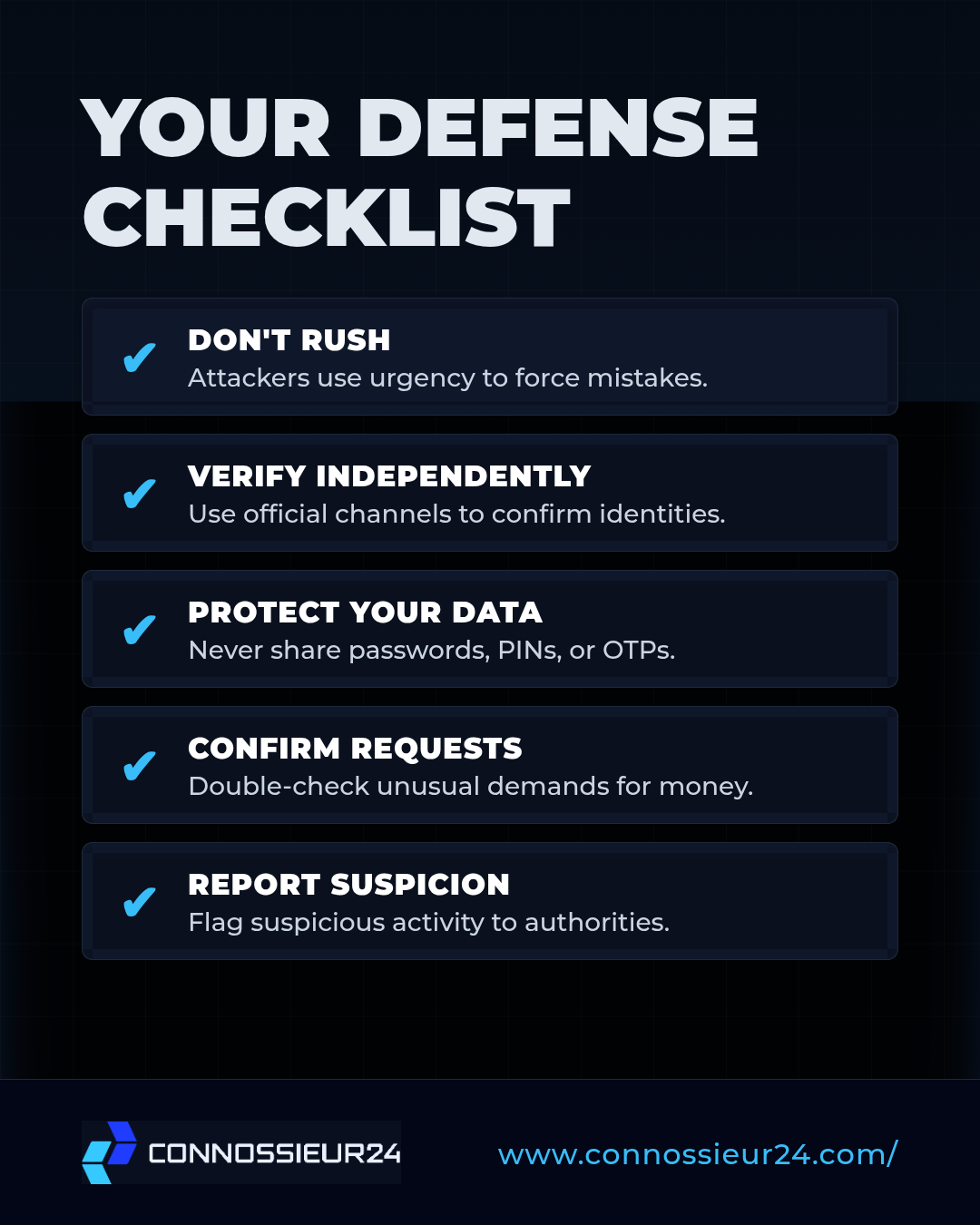
Because attackers use psychological manipulation, your best defense is a set of rigid, non-negotiable habits. Use this playbook whenever a digital interaction feels slightly off:
- Don't Rush: Attackers use urgency to force mistakes. If someone is demanding immediate action, that is your cue to slow down.
- Verify Independently: If someone claims to be from your bank, workplace, school, or another organization, do not use the links or numbers they provide. Contact them through an official, verified channel.
- Protect Your Data: Legitimate organizations will never ask for your passwords, PINs, OTPs, or verification codes. Never share them just because someone asks.
- Confirm Requests: If a friend or colleague suddenly asks for money or sensitive information via text or email, verify it by calling them or speaking to them in person.
- Report Suspicion: Do not just ignore a scam. Flag suspicious activity to the right authorities, IT departments, or platform administrators to protect others.
The Golden Rule
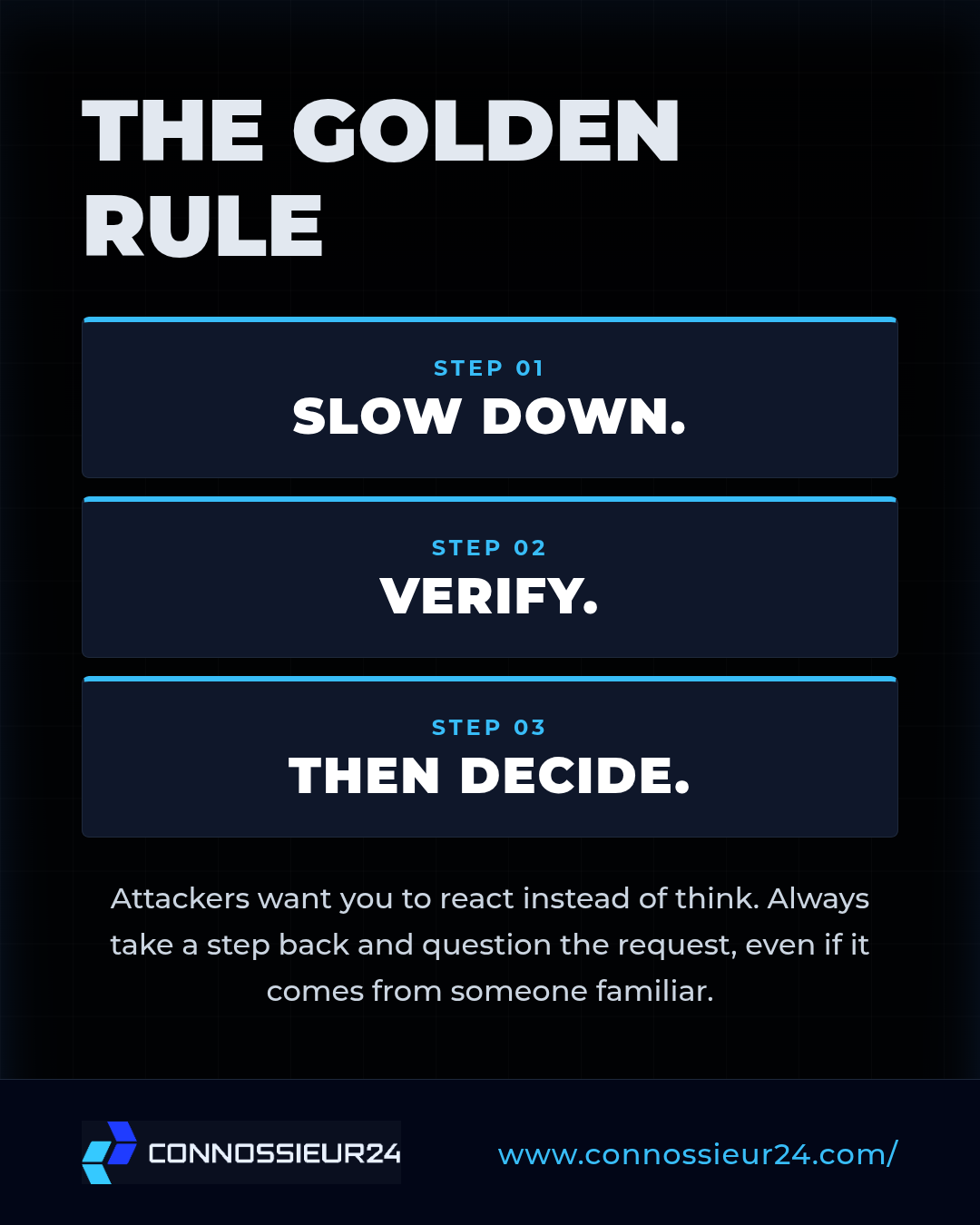
Social engineering is entirely dependent on you making a split-second decision based on pressure. Attackers want you to react instead of think.
You can neutralize almost every social engineering attack by simply applying this rule:
Slow down. Verify. Then decide.
Take a step back and question the request, even if it comes from someone familiar. Keeping a cool head is your strongest shield.