
Day 8: Can You Recognize Social Engineering?
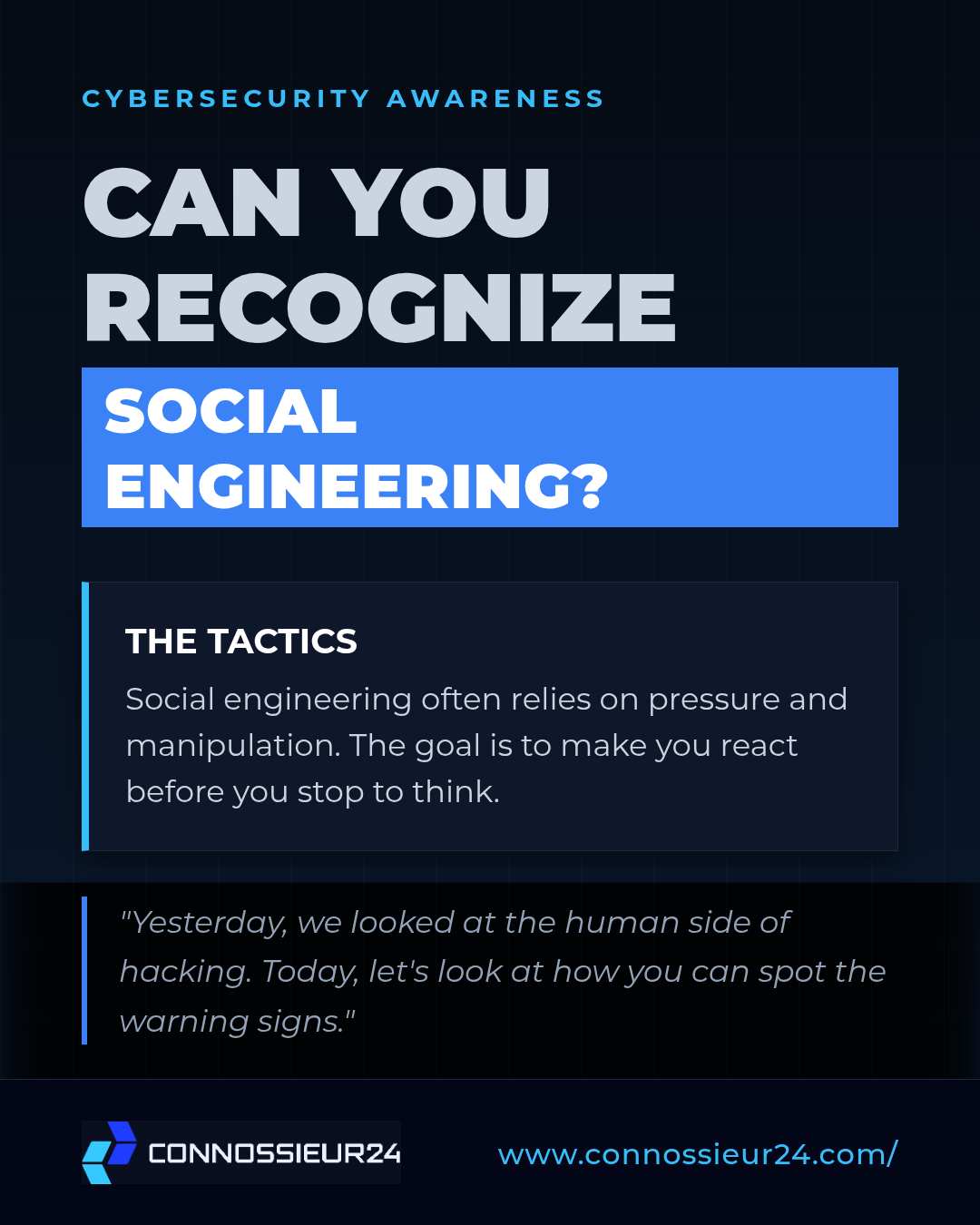
Yesterday, we looked at the human side of hacking—how cybercriminals exploit human psychology rather than software vulnerabilities. Today, we transition from understanding why social engineering works to mastering how to spot the warning signs before damage is done.
Social engineering attacks rely on targeted manipulation. The goal is simple: to make you react emotionally before you have time to think critically.
The Anatomy of Social Engineering Tactics
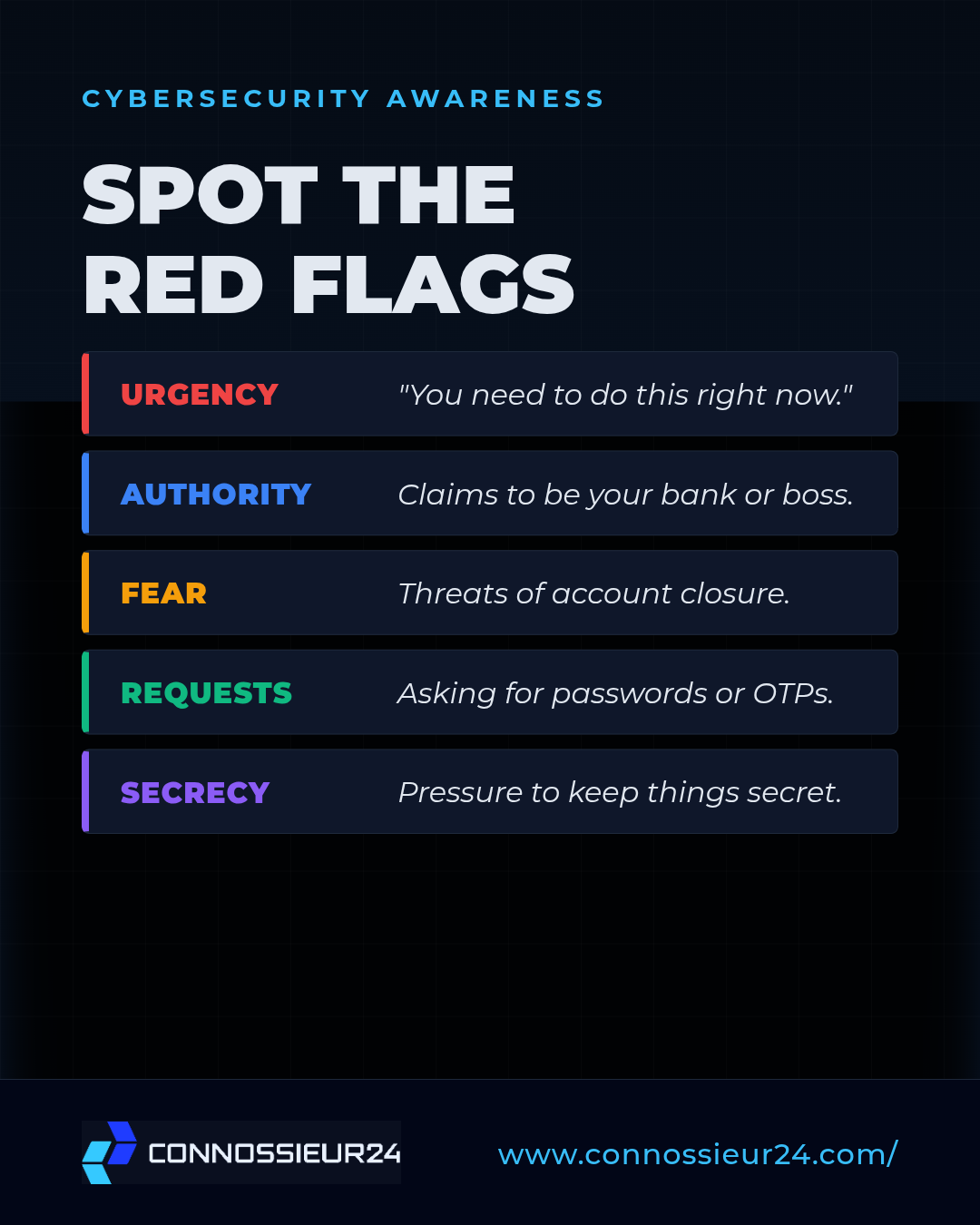
When attackers initiate contact—whether through email, SMS, phone calls, or direct messaging—they almost always leverage one or more psychological triggers:
By learning to identify these triggers instantly, you can defuse the attack before taking high-risk action.
🚩 Spot the Red Flags
Real-World Attack Scenarios
1. The Executive Impersonation (CEO Scam)
An urgent email appearing to come from your supervisor demands an immediate transfer or purchase of gift cards for an urgent client meeting. The attacker insists they are tied up in a meeting and cannot take phone calls.
2. The Urgent Banking Alert
You receive an SMS claiming an unauthorized transaction was made on your account. It prompts you to click a link or reply with a One-Time Password (OTP) to cancel the charge.
3. The Tech Support Trap
A caller claiming to be from your network provider or IT helpdesk reports an active virus on your machine and requests that you download a remote desktop access tool.
The Defense Framework: Pause, Question, Verify
When you encounter any request that triggers a sense of urgency, fear, or secrecy, apply this three-step defensive protocol:
-
Pause
Take a step back. Stop typing, clicking, or responding immediately. Recognize that artificial urgency is designed to make you panic. -
Question
Ask yourself critical verification questions:- Is this the normal procedure for this type of request?
- Why is this person asking for credentials, OTPs, or financial transactions over this channel?
- Is there an insistence on keeping this secret?
-
Verify
Use an out-of-band channel to verify the caller or sender. Contact the official customer service line, navigate directly to the official website in a new tab, or reach out to the person via a known, trusted phone number.
Key Takeaway
Security Guardrail: Never allow anyone to rush you into sharing passwords, One-Time Passwords (OTPs), or sensitive personal data. Authentic organizations will never demand immediate confidential verification under pressure.