
Day 10: Practical Test - Can You Spot the Scam?
Over the past few days, we’ve covered the mechanics of social engineering, the red flags to watch out for, and the actionable steps you can take to protect yourself.
Now, it is time to put that knowledge to the test. Let’s see if you can catch a social engineer in action.
The Test: Scenario A vs. Scenario B
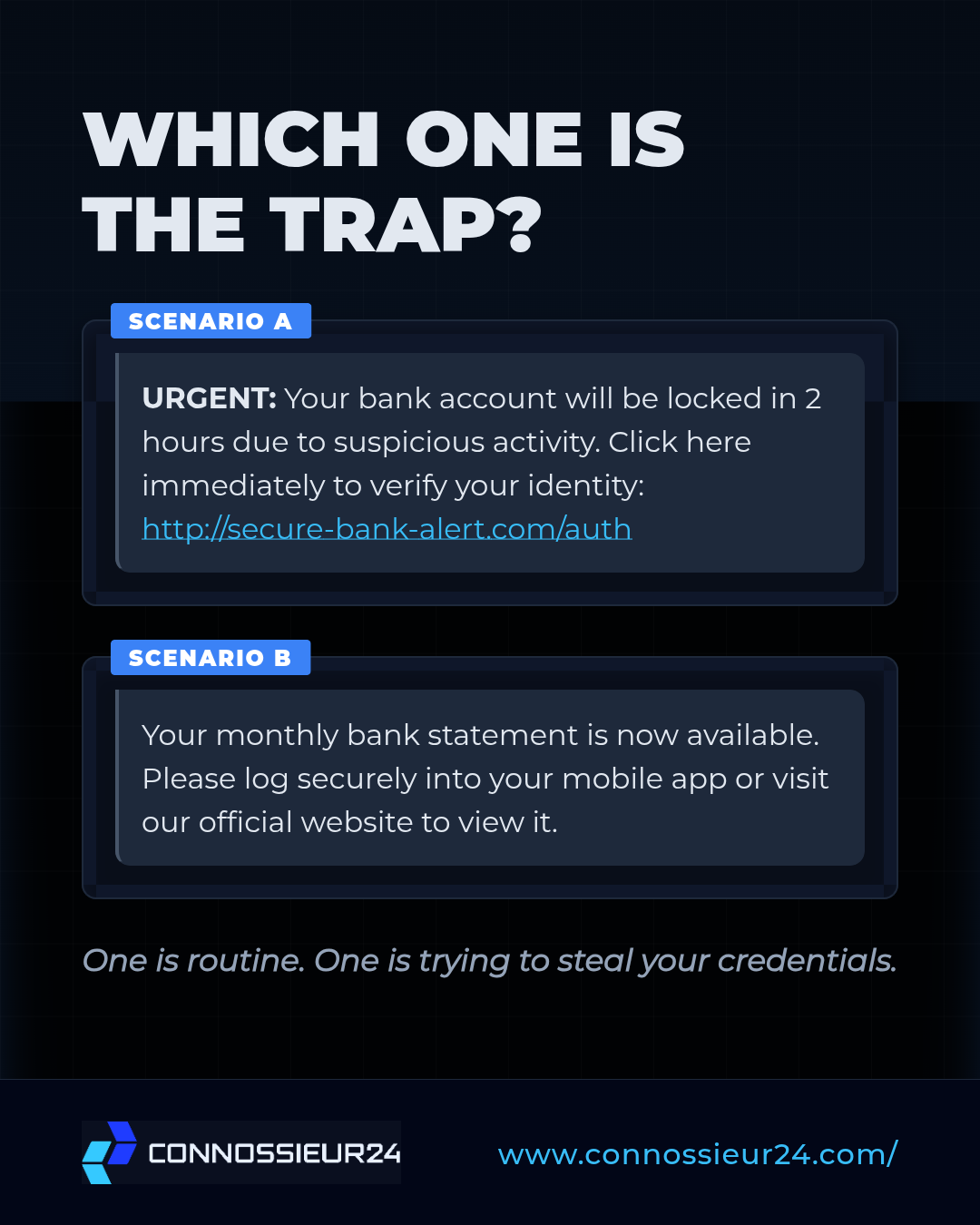
Look closely at the two messages above. One of them is a routine, harmless notification from a financial institution. The other is a targeted social engineering trap designed to steal your credentials.
Scenario A: "URGENT: Your bank account will be locked in 2 hours due to suspicious activity. Click here immediately to verify your identity: [link]"
Scenario B: "Your monthly bank statement is now available. Please log securely into your mobile app or visit our official website to view it."
Which one is the scam?
The Verdict
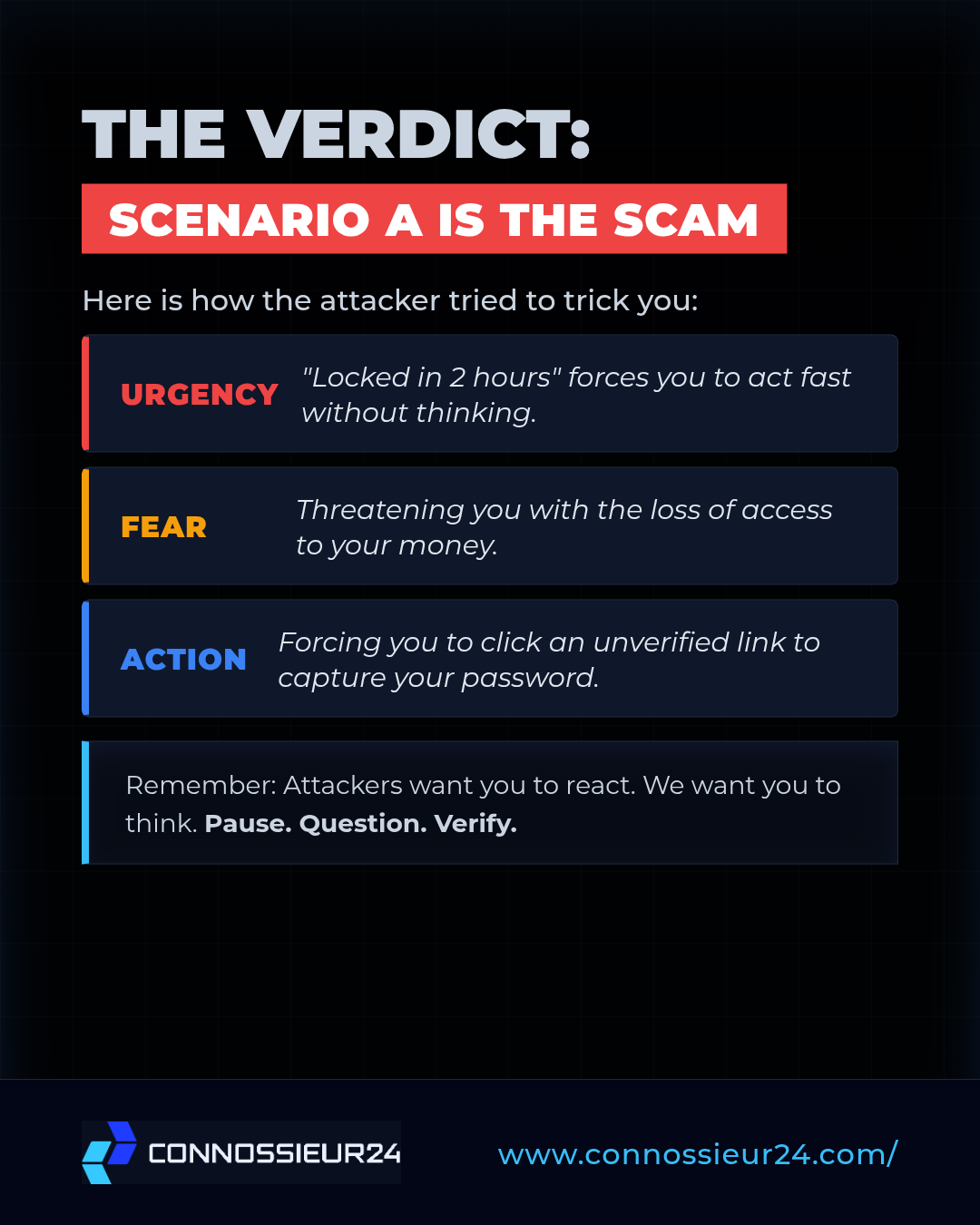
If you guessed Scenario A, you are correct! Scenario A is a classic phishing text (also known as "smishing").
But why is it a scam? It all comes down to the psychological triggers we discussed on Day 8:
- Urgency: The message states you will be "locked out in 2 hours." This creates an artificial timeline, forcing you to act fast without stopping to think.
- Fear: It threatens you with the loss of access to your money, triggering panic.
- The Trap (Action): It provides a highly suspicious link and forces you to click it to "verify your identity," which will lead to a fake login page designed to capture your username and password.
Scenario B, on the other hand, is a standard notification. It does not threaten you, it does not force an artificial deadline, and most importantly, it tells you to log in securely through your own app, rather than forcing you to click an unverified link.
Key Takeaway
Attackers want you to react. They rely on your panic and your fear to bypass your common sense. We want you to think. The next time you receive a message that makes your heart skip a beat, remember the golden rule:
Pause. Question. Verify.