
Day 7: The Human Side of Hacking
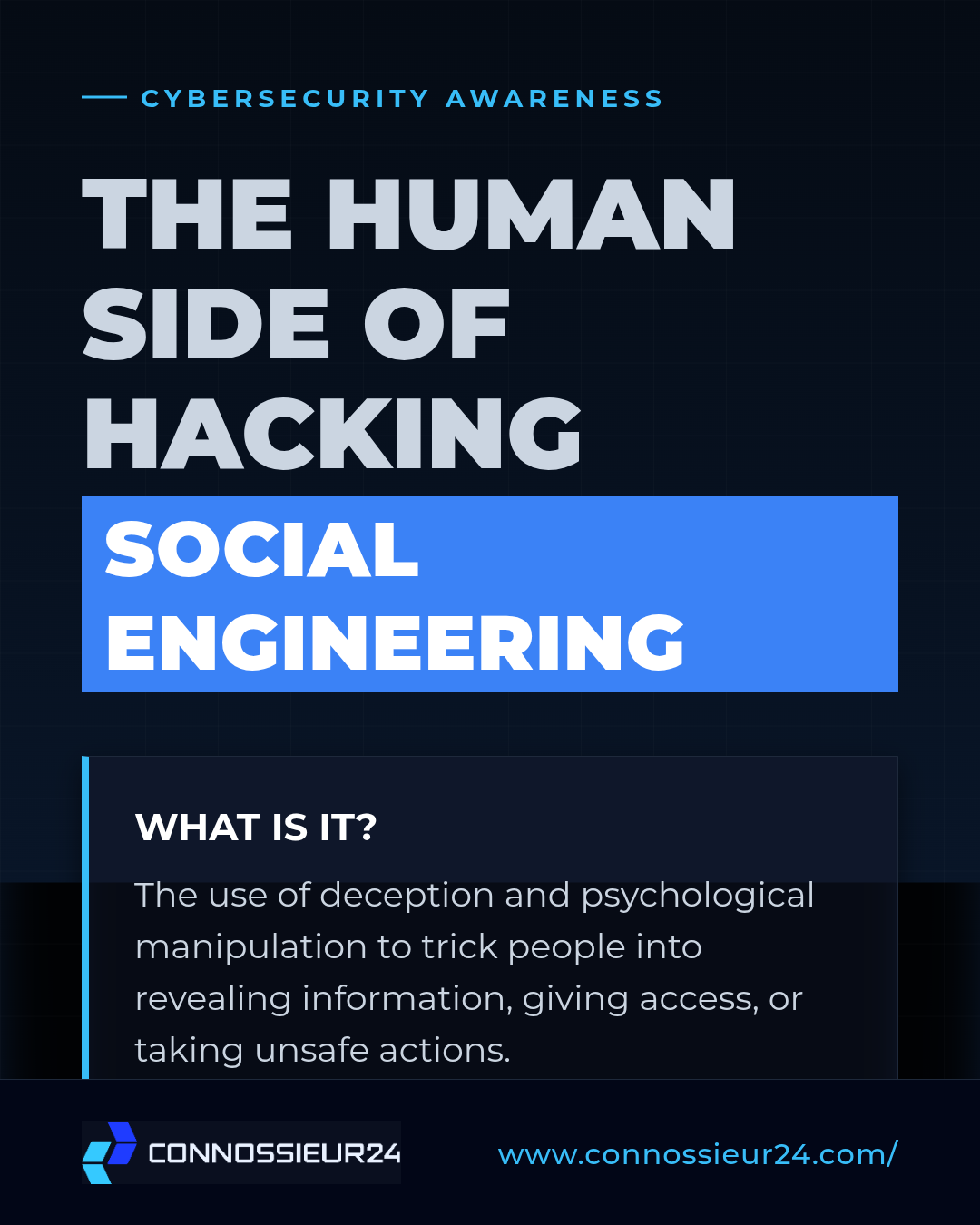
Not every cyberattack begins with lines of complex code or sophisticated malware. Frequently, the attack targets the human behind the screen.
What is Social Engineering?
Social engineering is the use of deception and psychological manipulation to trick people into revealing information, giving access, or taking unsafe actions.
Instead of spending weeks trying to crack a encrypted firewall, attackers find it much easier to simply convince an authorized user to hand over their access credentials.
What Are the Odds?
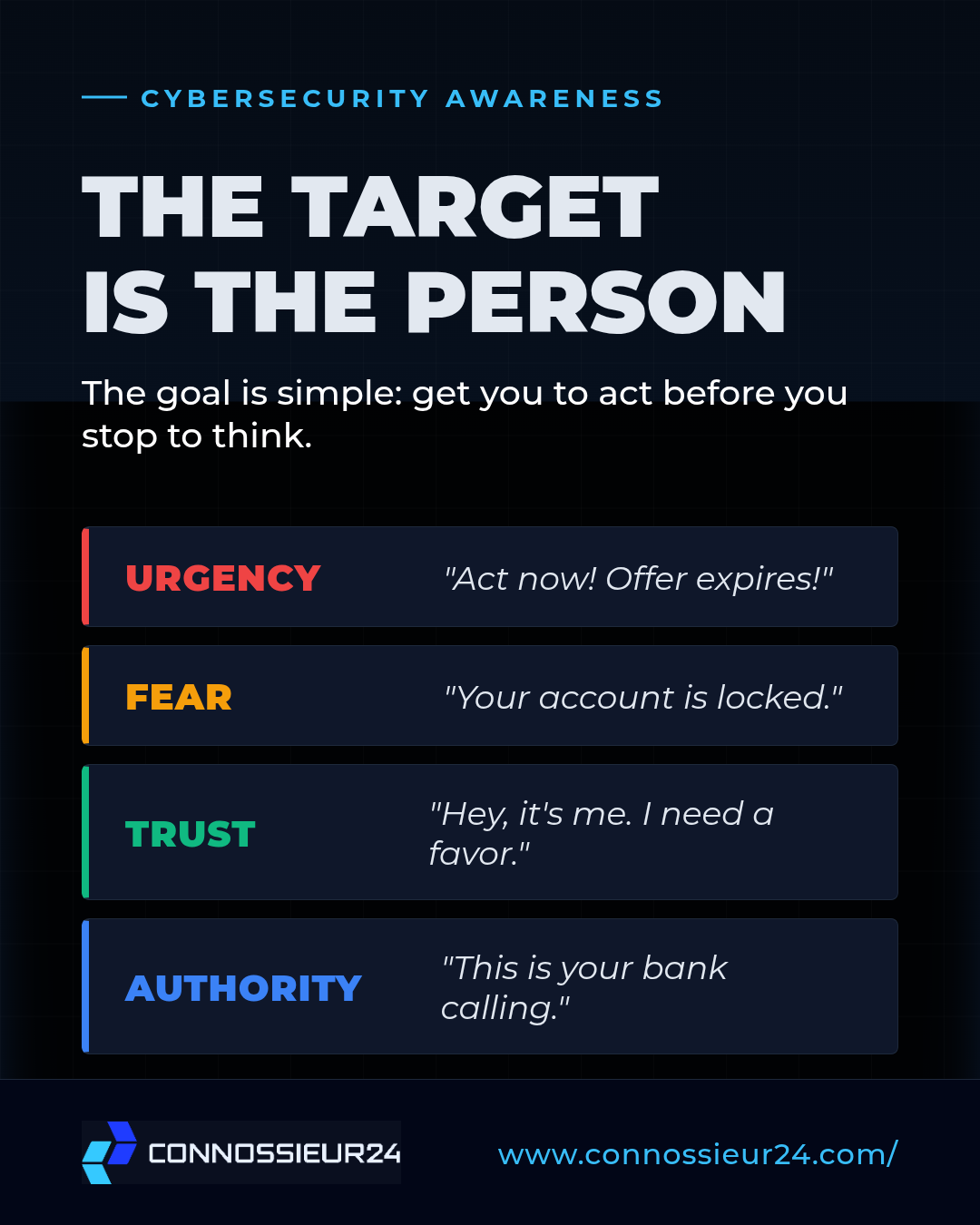
According to recent global cybersecurity data, 57% of adults worldwide experienced a scam in the past 12 months.
This statistic underscores a critical reality in modern security: scams don't just exploit technology. They exploit people.
The Target is the Person
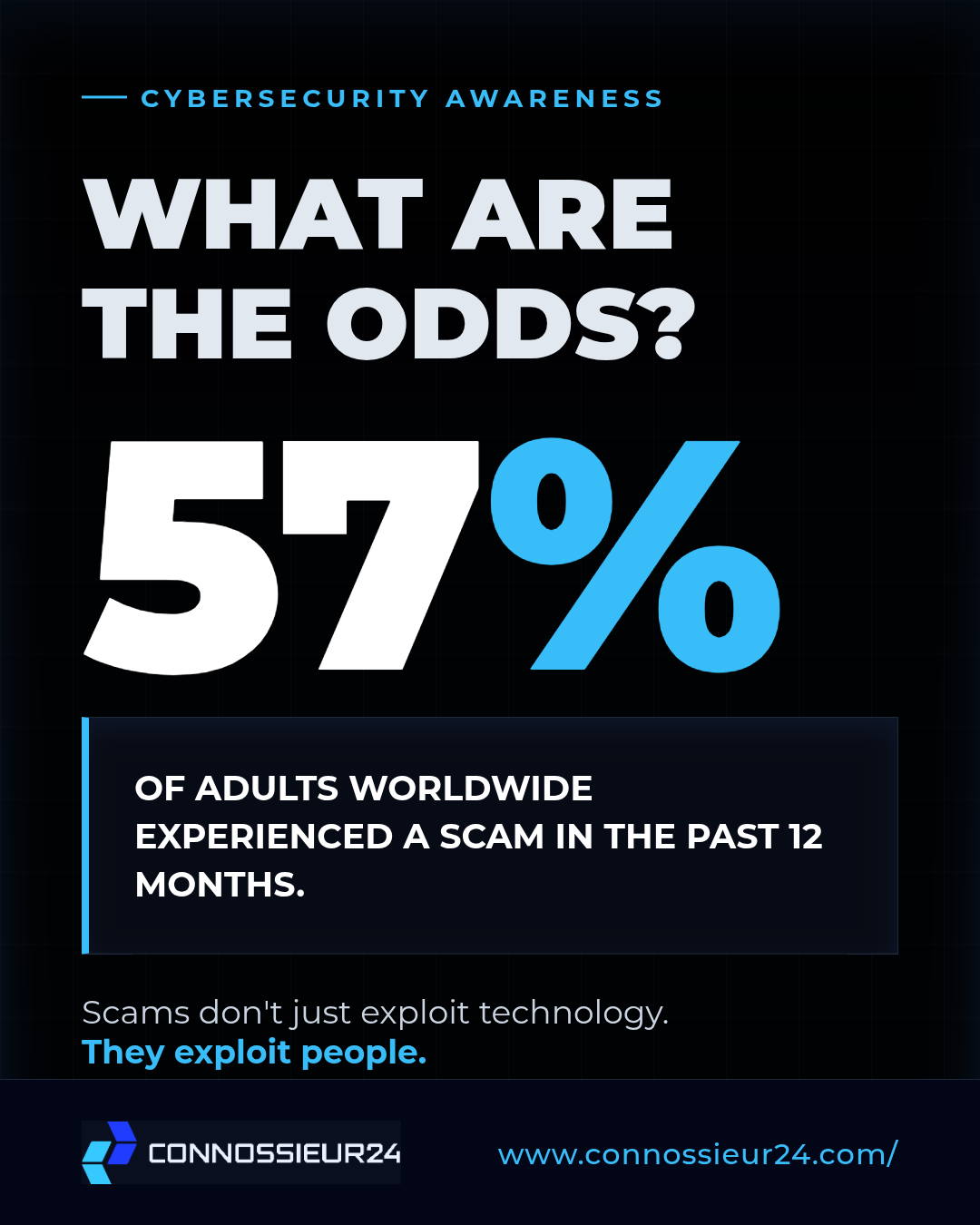
The fundamental goal of a social engineering attack is simple: get you to act before you stop to think.
To achieve this, attackers manipulate core human emotions and instinctual responses:
- Urgency (
"Act now! Offer expires!"): Creates artificial time pressure to rush your decision making before you can double-check the facts. - Fear (
"Your account is locked."): Induces immediate panic, prompting you to click fraudulent links in an effort to restore access. - Trust (
"Hey, it's me. I need a favor."): Exploits personal or professional relationships by impersonating co-workers, friends, or trusted contacts. - Authority (
"This is your bank calling."): Leverages official stature, corporate hierarchy, or law enforcement personas to demand compliance without question.
Key Takeaway
Technical controls like firewalls and antivirus software are essential, but your awareness is the final line of defense. Whenever an incoming message triggers a strong emotional response—whether panic, pressure, or obligation—pause and verify the sender independently before taking any action.