
Day 4: Understanding Online Scams
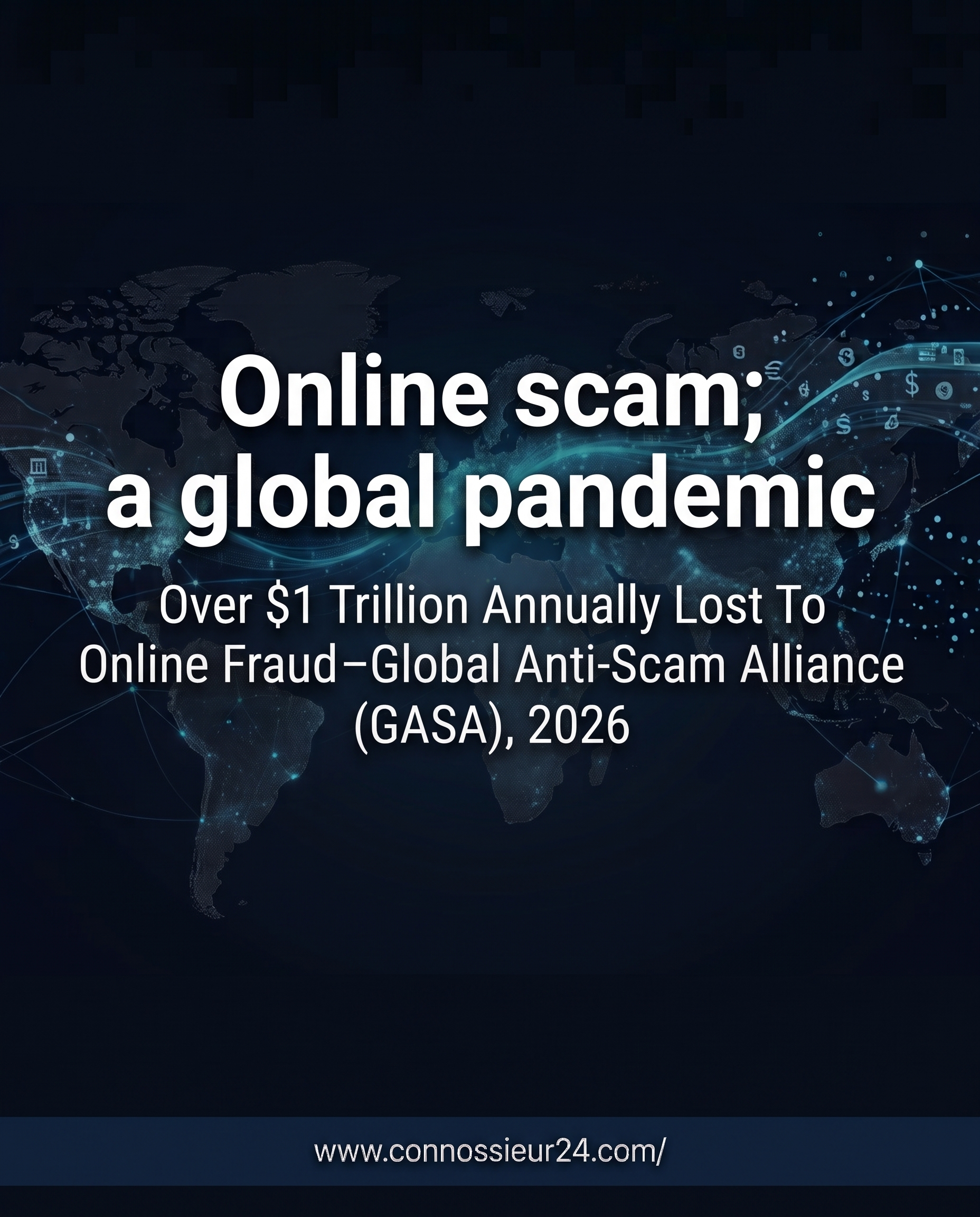
Online fraud is no longer just an occasional nuisance—it has grown into a global pandemic. According to the Global Anti-Scam Alliance (GASA), over $1 trillion is lost annually to online fraud worldwide.
Understanding how these scams work is your strongest line of defense.
What is an Online Scam?
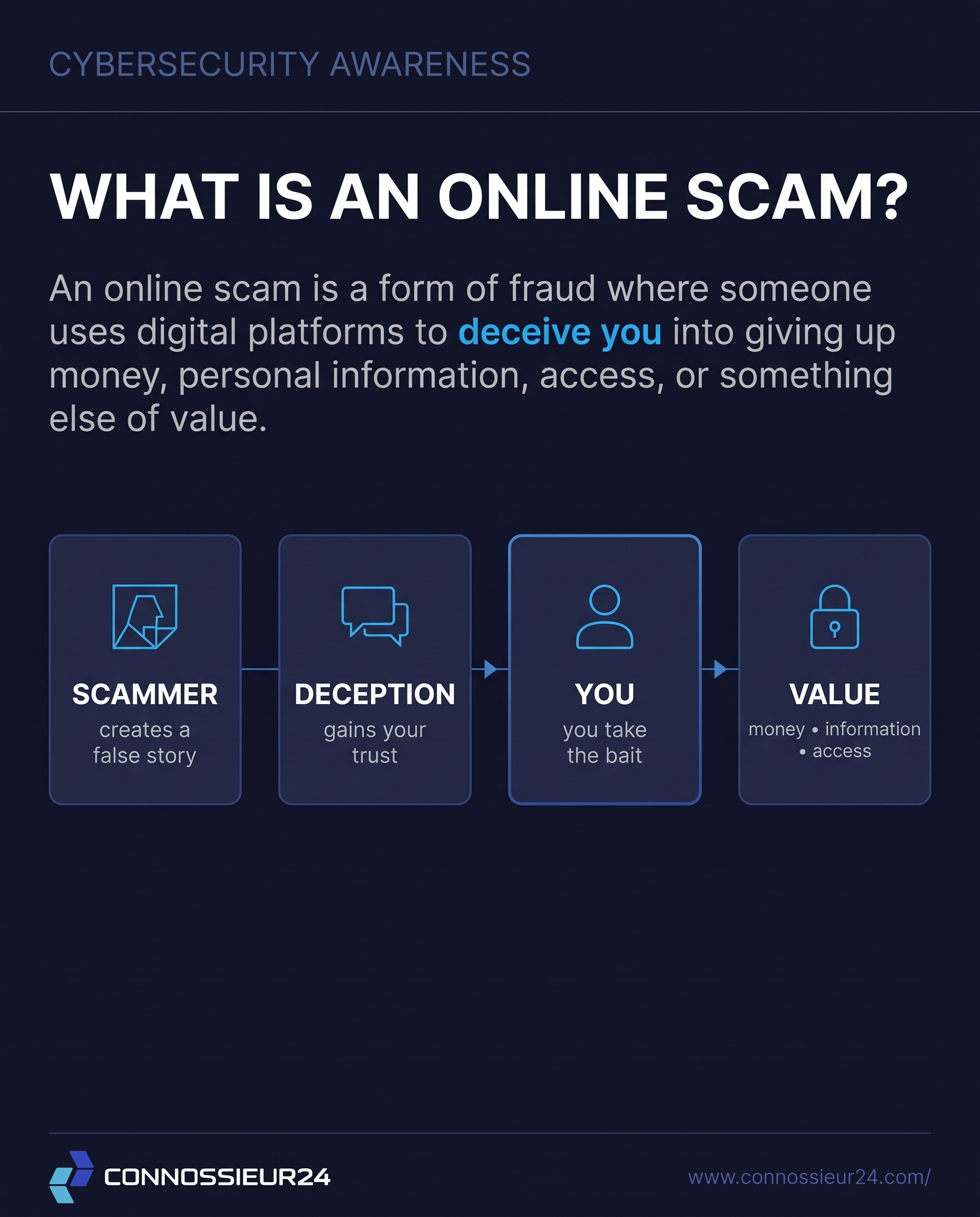
An online scam is a form of fraud where someone uses digital platforms to deceive you into giving up money, personal information, access, or something else of value.
Every scam follows a predictable four-step chain:
- Scammer: Creates a believable, false story.
- Deception: Gains your trust through digital channels.
- You: Take the bait based on the false pretense.
- Value: Hand over money, credentials, or private information.
5 Common Online Scam Traps
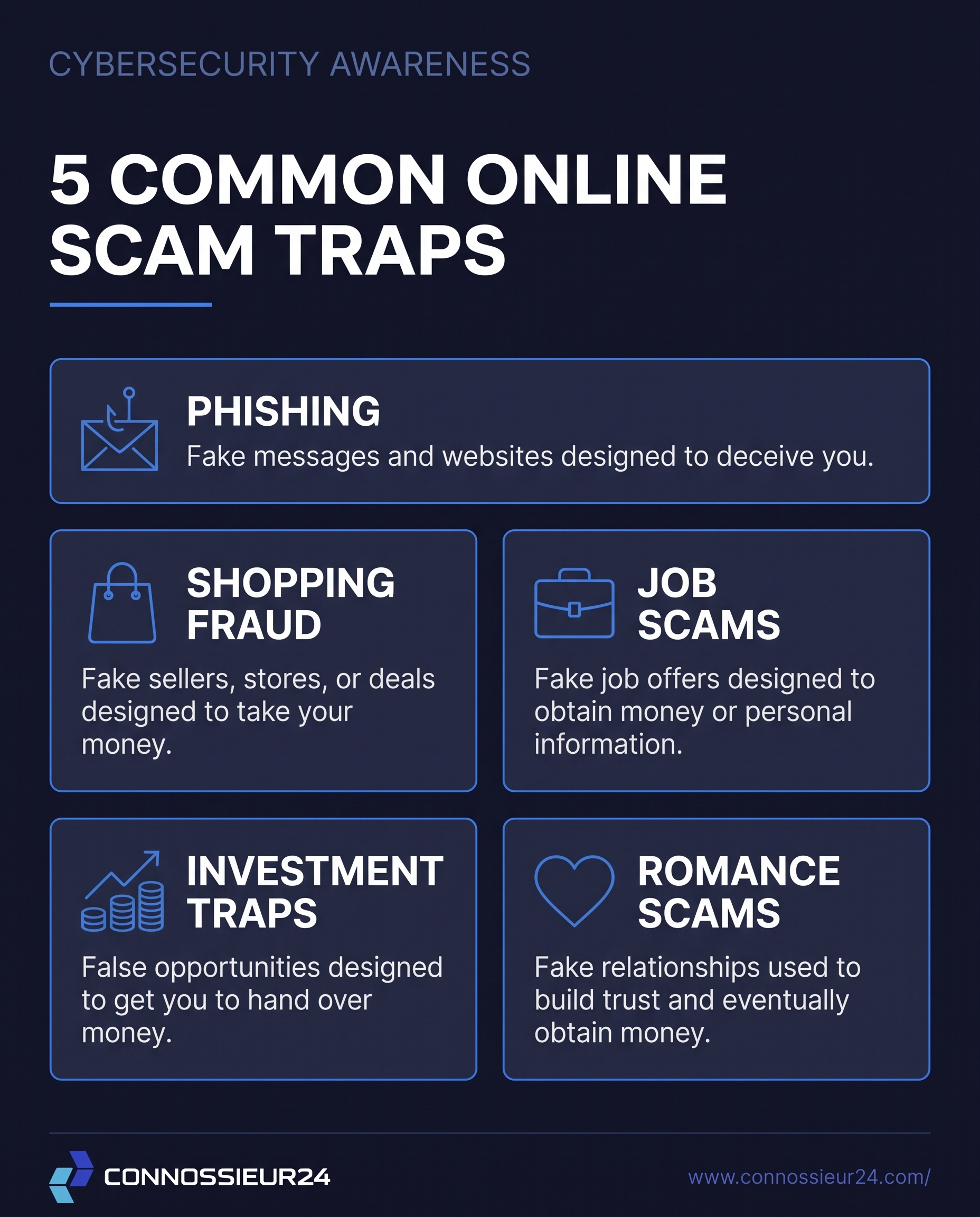
Scams take many shapes depending on the attacker's objective, but most fall into five major categories:
- Phishing: Fake emails, texts, and fake websites designed to deceive you into handing over logins or personal data.
- Shopping Fraud: Fake online sellers, fraudulent storefronts, or "too good to be true" deals built to take your credit card info and money.
- Job Scams: Fake employment offers that request upfront fees, personal details, or sensitive verification information under the guise of hiring.
- Investment Traps: High-yield or zero-risk financial opportunities engineered to get you to hand over funds.
- Romance Scams: Fraudulent online relationships designed to build deep emotional trust before asking for financial assistance or gifts.
How Scammers Exploit Human Weakness
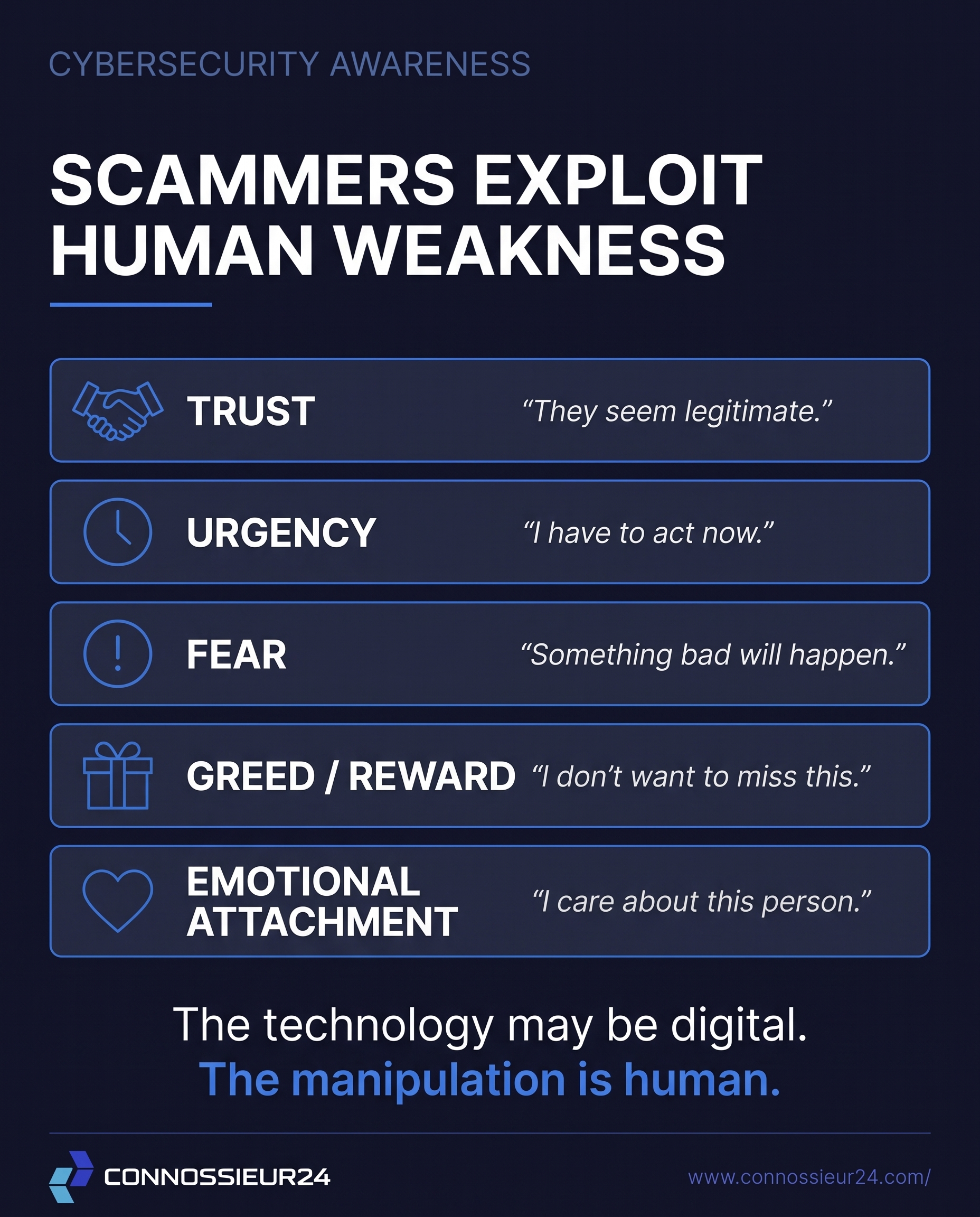
The technology behind scams might be digital, but the manipulation is entirely human. Scammers rarely hack systems directly—they hack human emotions:
- Trust: "They seem legitimate." Impersonating brands, figures, or friends you already know.
- Urgency: "I have to act now." Creating artificial rush so you don't stop to think.
- Fear: "Something bad will happen." Threatening account suspension, legal action, or fines.
- Greed / Reward: "I don't want to miss this." Dangling prizes, fast returns, or exclusive deals.
- Emotional Attachment: "I care about this person." Leveraging sympathy, affection, or personal connections.
How the Trap Works
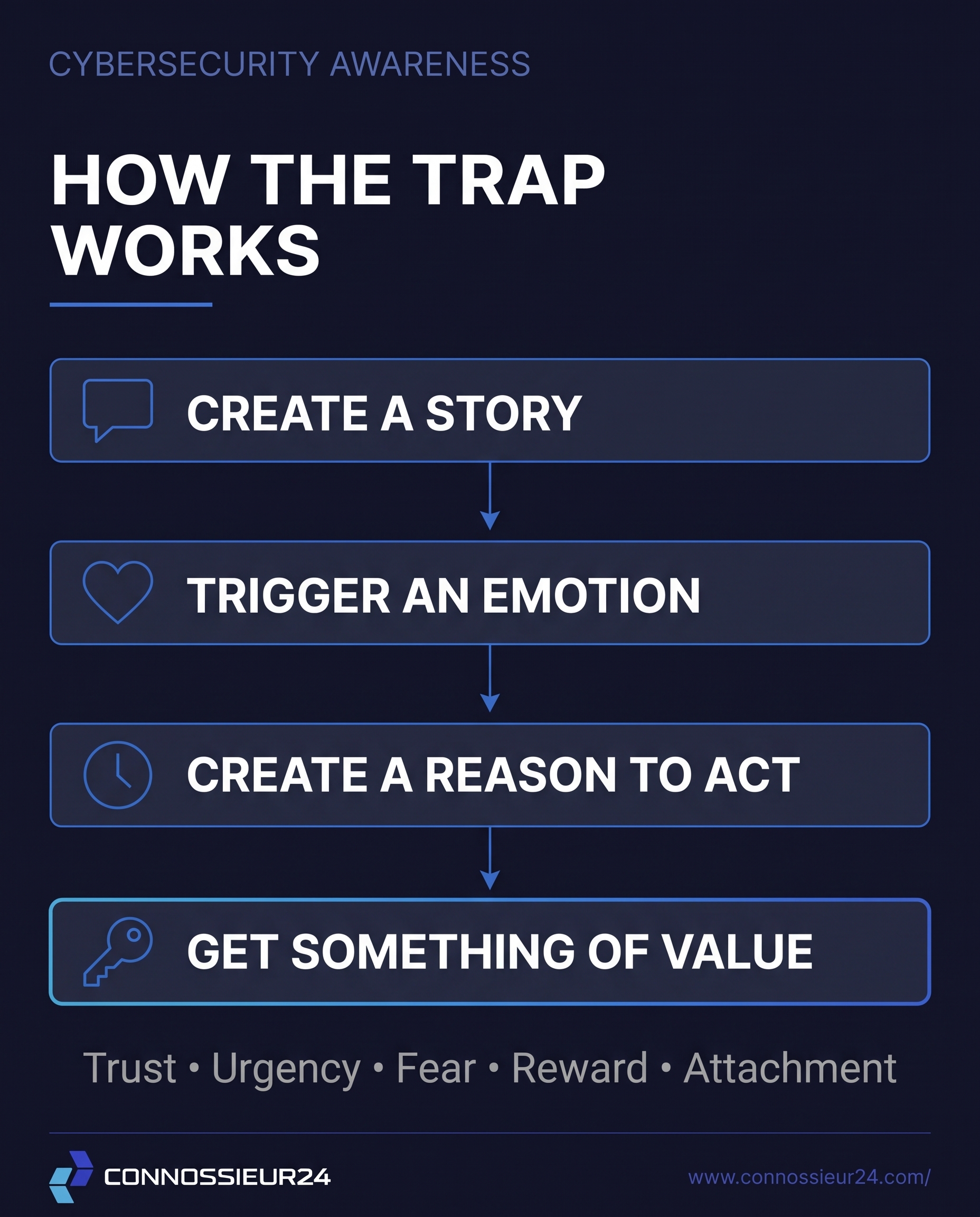
Regardless of the medium, almost every trap follows this sequential breakdown:
- Create a story to establish context.
- Trigger an emotion (Trust, Urgency, Fear, Reward, or Attachment).
- Create a reason to act before you can verify.
- Get something of value once you take the action.
Key Takeaway
Technology changes, but human nature stays the same. When a digital message makes you feel sudden urgency, fear, or excitement, pause and verify through a separate channel before taking action.