
Day 5: Spotting Job Offer Scams

Unsolicited text messages offering high-paying remote work have exploded in popularity. These job scams target people looking for flexible work, promising incredible pay for minimal effort—until they ask for money upfront.
Let's dissect a typical recruitment SMS and break down the warning signs.
A Job Offer Arrives
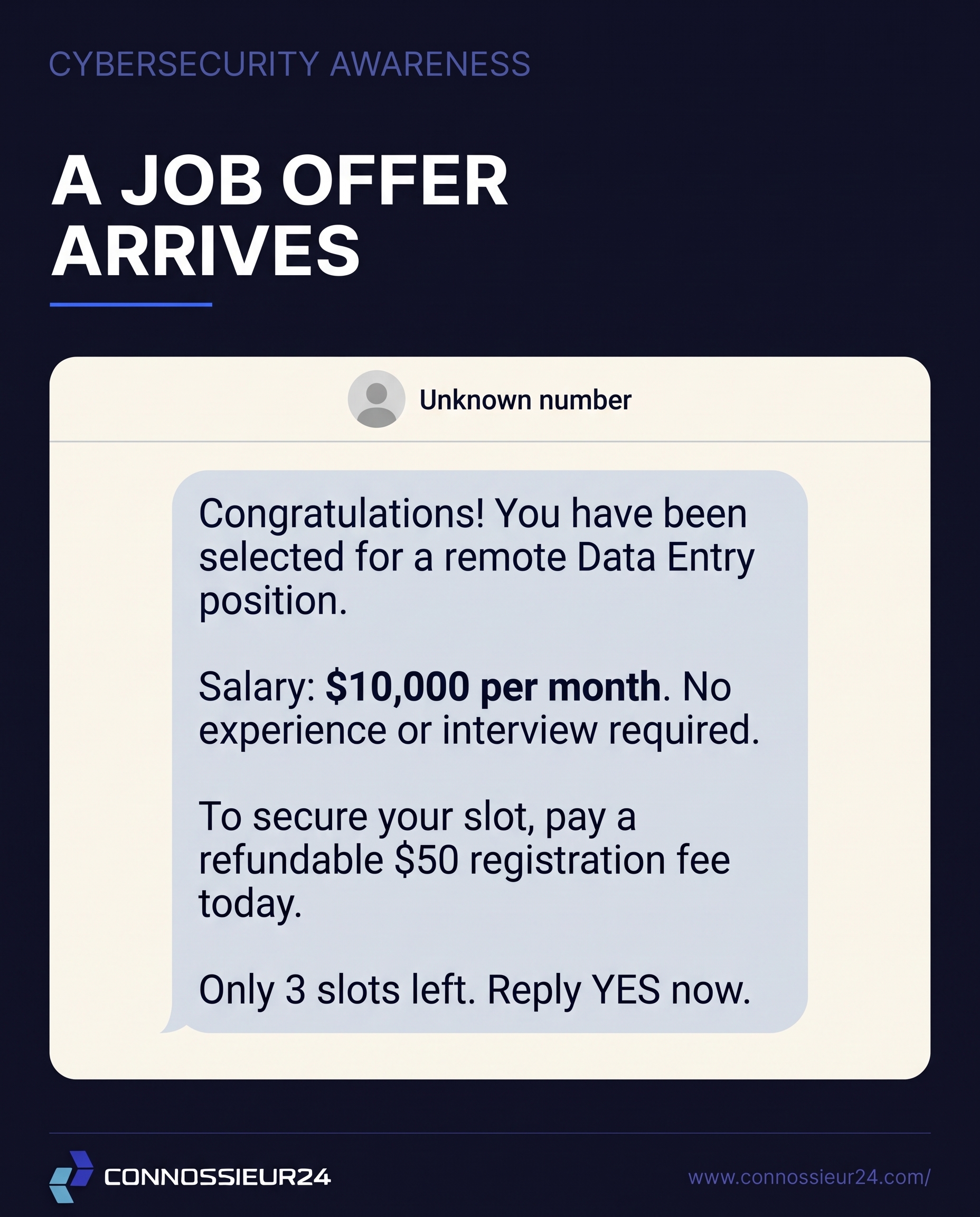
Consider this text message received out of the blue from an unknown sender:
"Congratulations! You have been selected for a remote Data Entry position. Salary: $10,000 per month. No experience or interview required. To secure your slot, pay a refundable $50 registration fee today. Only 3 slots left. Reply YES now."
At first glance, it sounds like an easy opportunity. But when you inspect the wording, multiple red flags appear immediately.
Red Flags 1 & 2: Sender & Upfront Fees
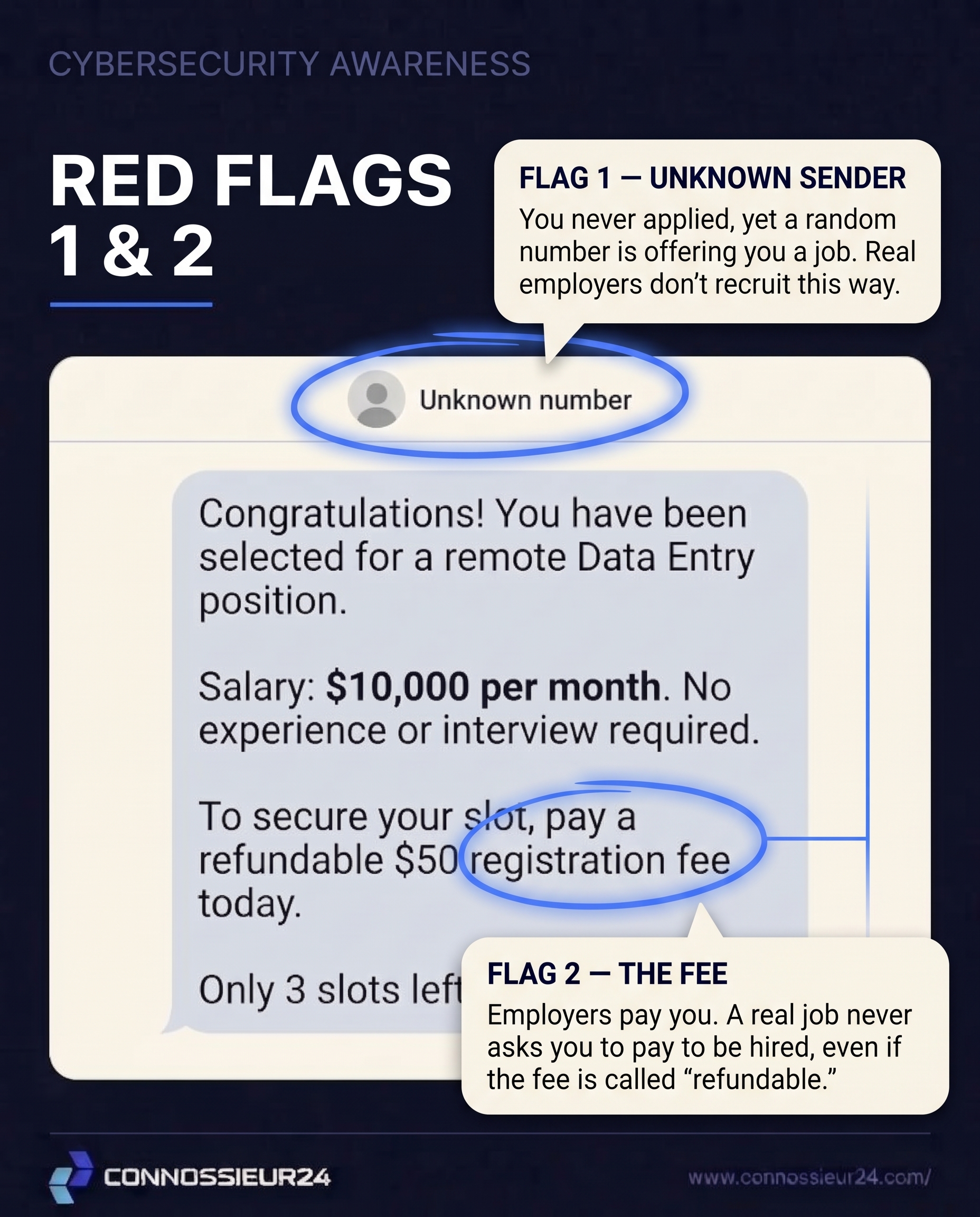
1. The Unknown Sender
- What it shows: The message comes from an unknown, unverified phone number.
- The Red Flag: You never applied for this position. Legitimate companies do not recruit candidates via random, unsolicited SMS messages without prior application or formal professional outreach.
2. The Upfront Fee
- What it shows: The text asks for a "refundable $50 registration fee" to secure your spot.
- The Red Flag: Employers pay you, not the other way around. A legitimate employer will never ask you to pay money for onboarding, equipment reservation, or "registration"—regardless of whether they claim the fee is refundable.
Red Flags 3 & 4: Outrageous Pay & Artificial Scarcity
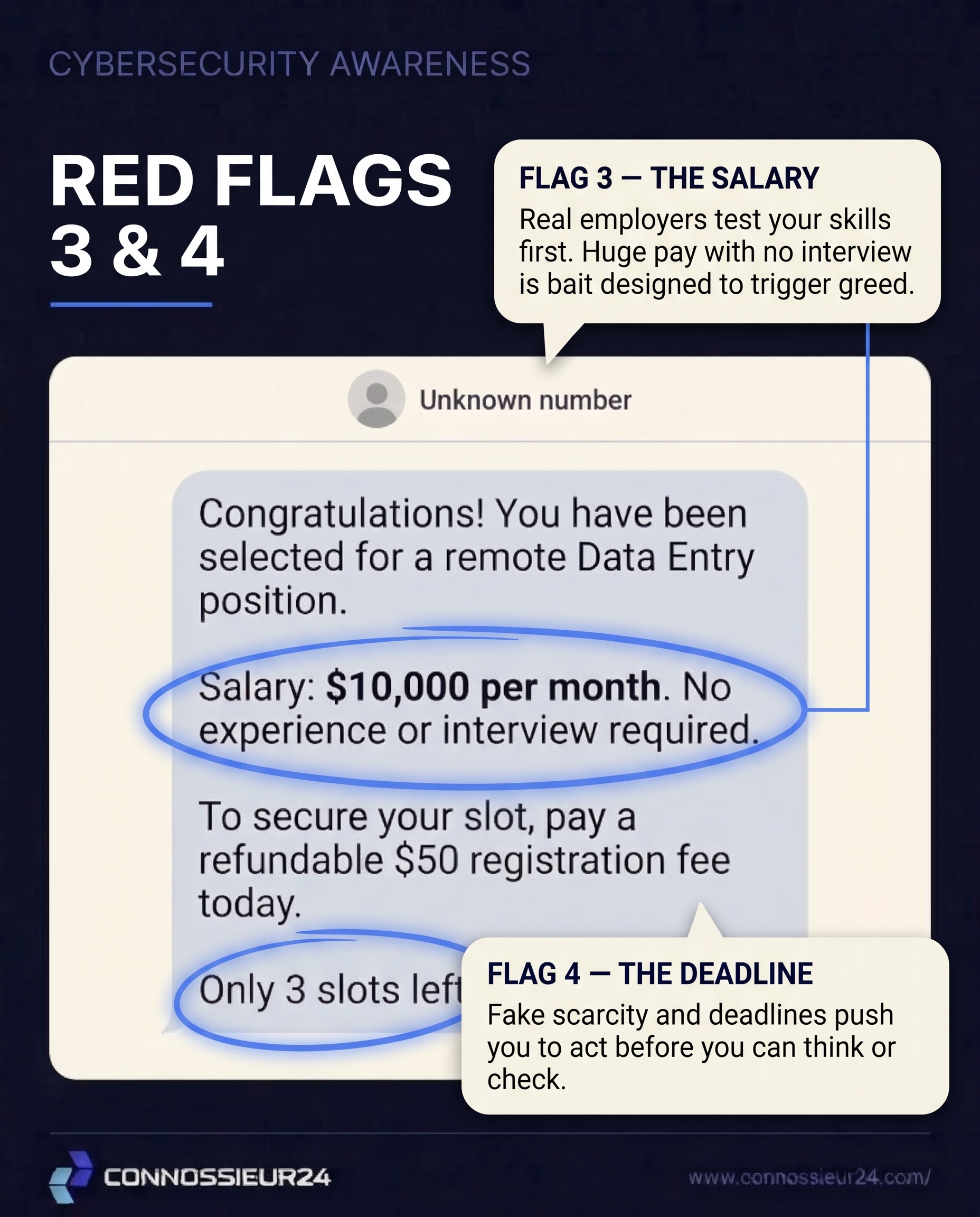
3. The Unrealistic Salary
- What it shows: Promising $10,000 per month for entry-level data entry with "no experience or interview required."
- The Red Flag: $120,000 a year for an entry-level role with zero interview process is financial bait designed to trigger excitement and bypass your critical thinking. Real employers always evaluate candidates before making an offer.
4. The Artificial Deadline
- What it shows: "Only 3 slots left. Reply YES now."
- The Red Flag: Scammers use fake scarcity and intense pressure to force you into acting before you have time to consult friends, family, or verify the company independently.
Key Takeaway
If an opportunity sounds too good to be true, it almost certainly is. Legitimate jobs never require upfront payments, and real companies will always evaluate your qualifications before offering employment.