
Day 26: How Does a Data Breach Happen?
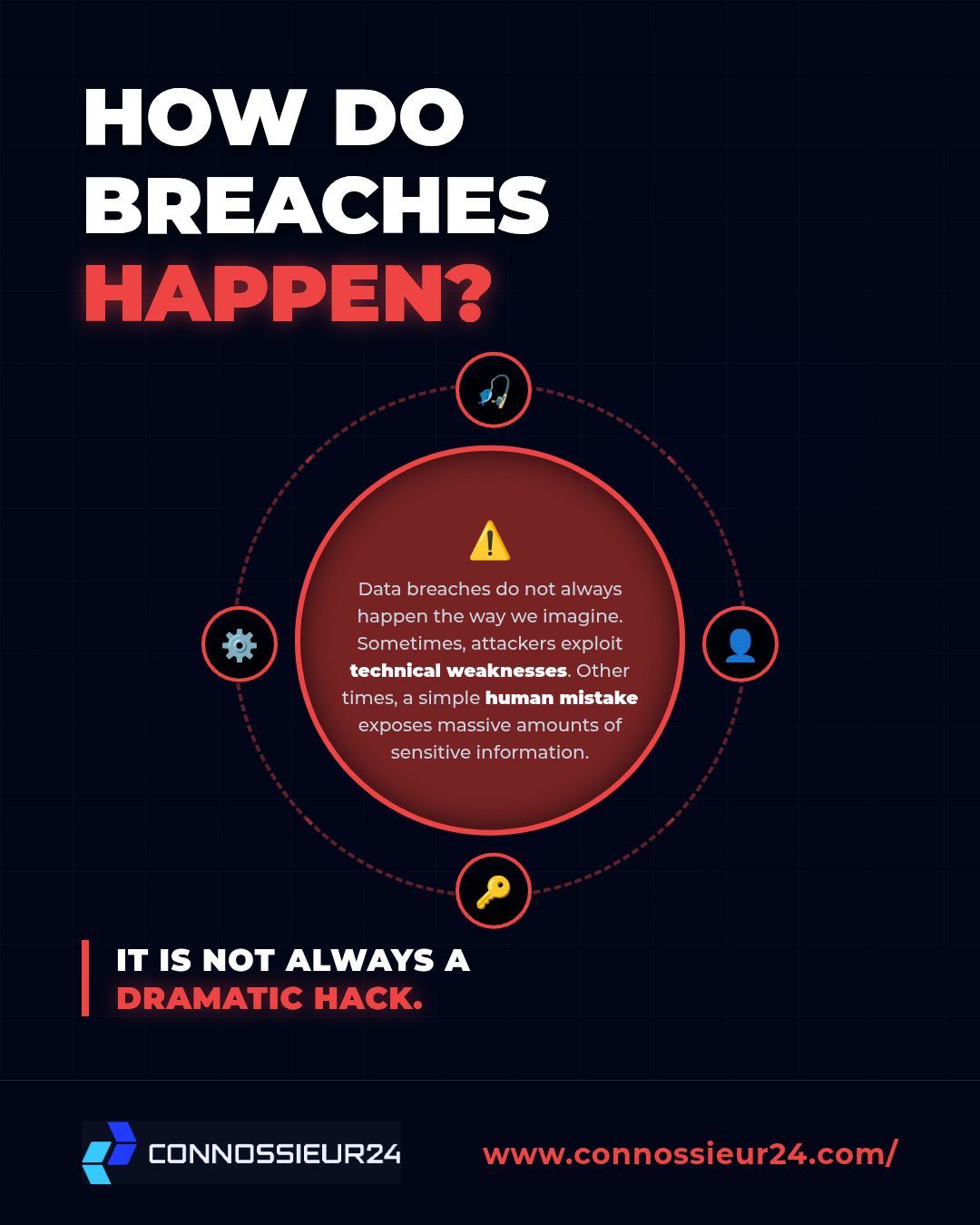
Data breaches do not always happen the way they are portrayed in movies. It is not always a dramatic hack by a hooded figure in a dark room.
Sometimes, attackers do exploit complex technical weaknesses. But other times, a simple human mistake or an oversight exposes massive amounts of sensitive information to the public.
The Attack Vectors
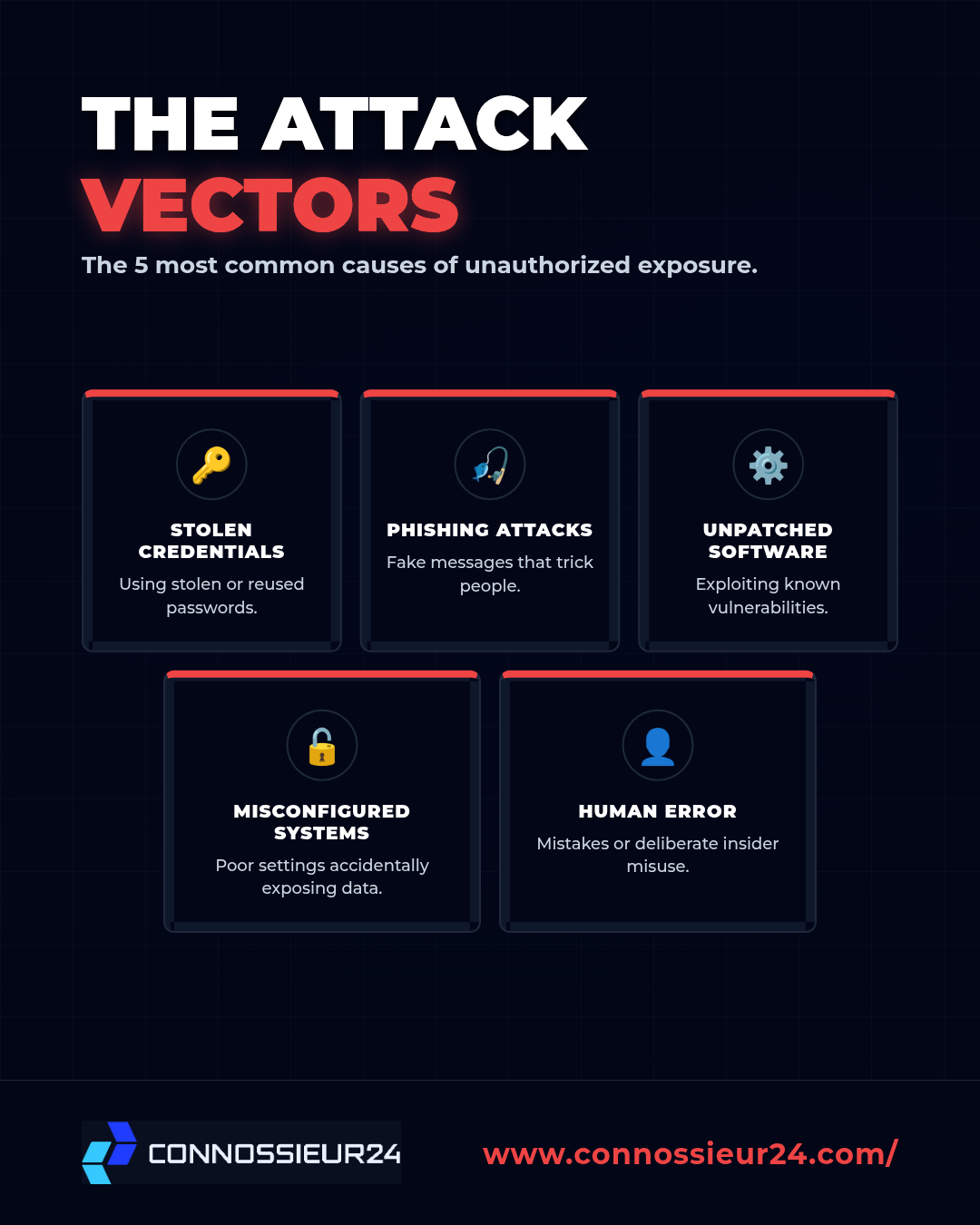
While every breach is unique, most unauthorized exposures stem from a few common vulnerabilities. Here are the five primary causes:
- Stolen Login Credentials: Attackers use stolen, weak, or reused passwords to quietly access accounts without triggering alarms.
- Phishing Attacks: Fake emails, messages, or websites trick people into voluntarily revealing their credentials or downloading malicious files.
- Unpatched Software: Attackers actively exploit known vulnerabilities in outdated operating systems and applications.
- Misconfigured Systems: Poor security settings, like leaving a cloud storage bucket open to the public, can accidentally expose private information.
- Insider Threats & Human Error: Someone with authorized access may deliberately misuse it, send information to the wrong recipient, or expose data accidentally.
The Ripple Effect
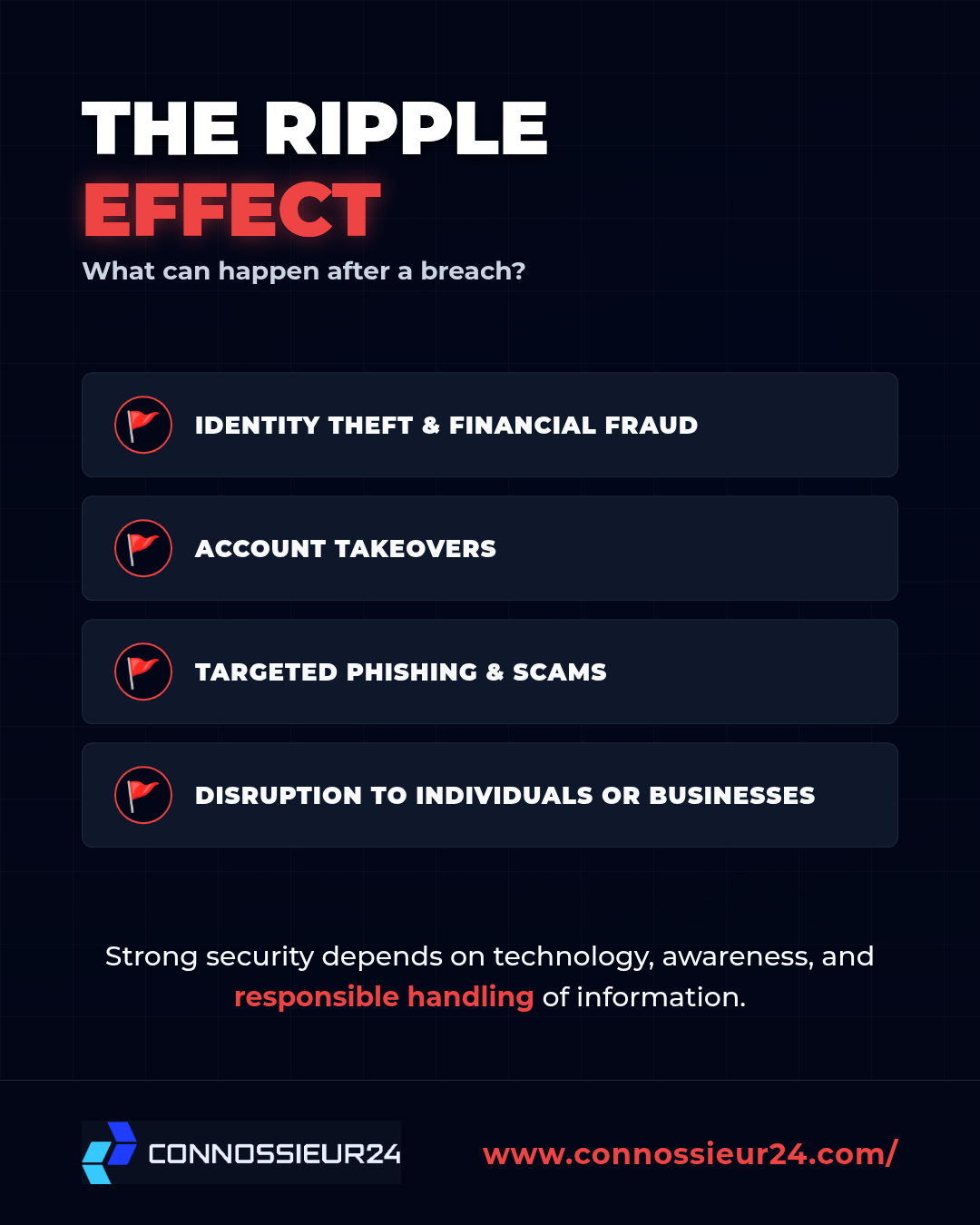
Not every breach involves stolen passwords, and not every exposed record immediately leads to fraud. However, any unauthorized exposure deserves serious attention.
Once data is breached, it often leads to a ripple effect of consequences, including identity theft, targeted phishing campaigns, total account takeovers, and a massive loss of trust for businesses.
Strong security depends on updated technology, continuous awareness, and the responsible handling of information.