
Day 25: What is a Data Breach?
Imagine waking up to discover that your email address, password, phone number, or financial information has been exposed to the public without your permission. That is exactly what happens during a data breach.
A data breach occurs when sensitive information is accessed, disclosed, or exposed without authorization. While we often think of breaches happening to large corporations, it is ultimately your personal data that ends up in the hands of criminals.
What Gets Exposed?
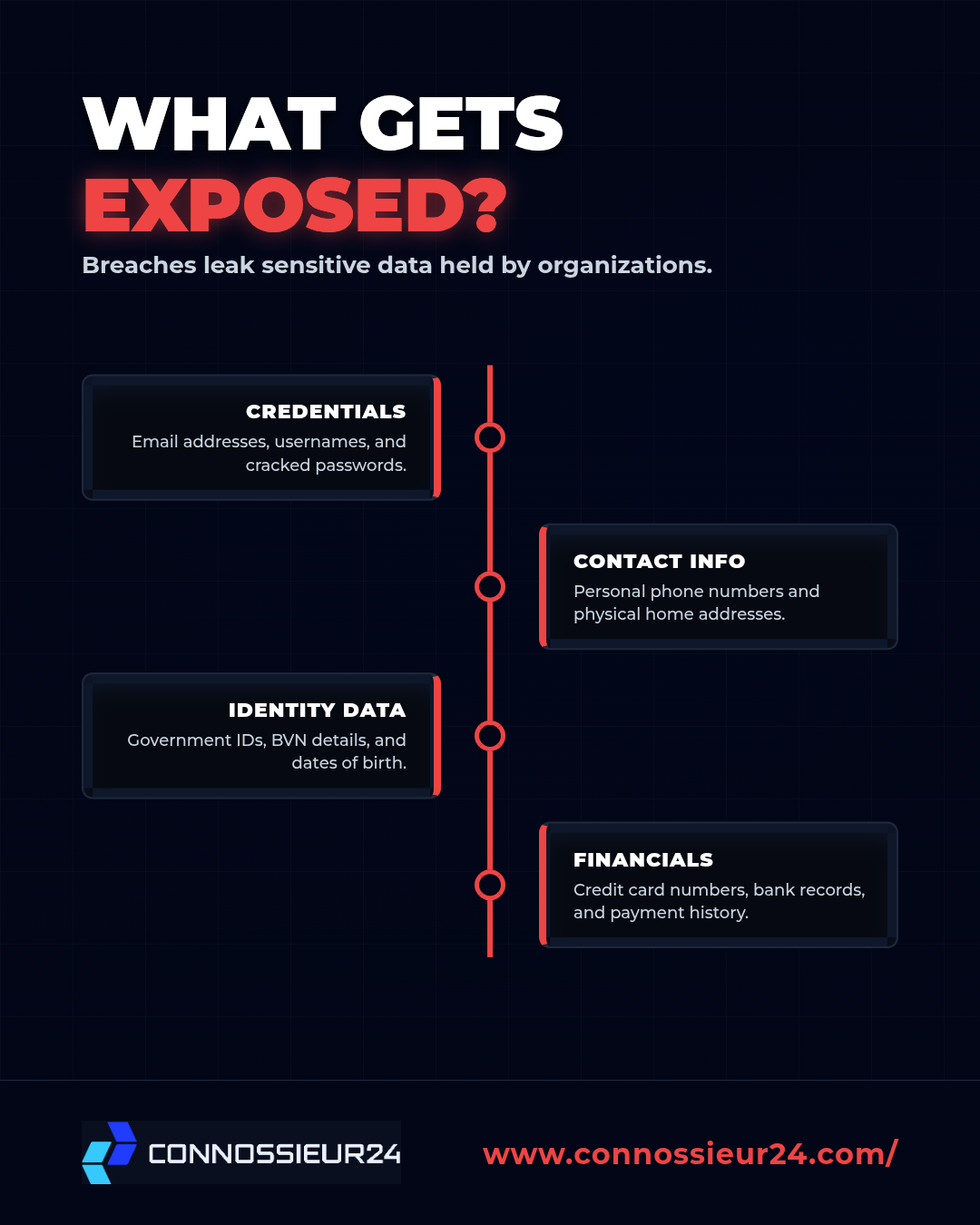
When attackers exploit a security weakness or steal login credentials from an organization, they are hunting for valuable data. A single breach can expose:
- Credentials: Email addresses, usernames, and passwords.
- Contact Information: Phone numbers and physical home addresses.
- Identity Information: Government IDs, BVN details, and dates of birth.
- Financial Data: Credit card details and private payment histories.
- Private Documents: Internal business records and confidential emails.
Breaches do not just happen through complex hacks. They can also occur when employees are tricked by social engineering or when databases are accidentally left unsecured on the internet.
The Fallout
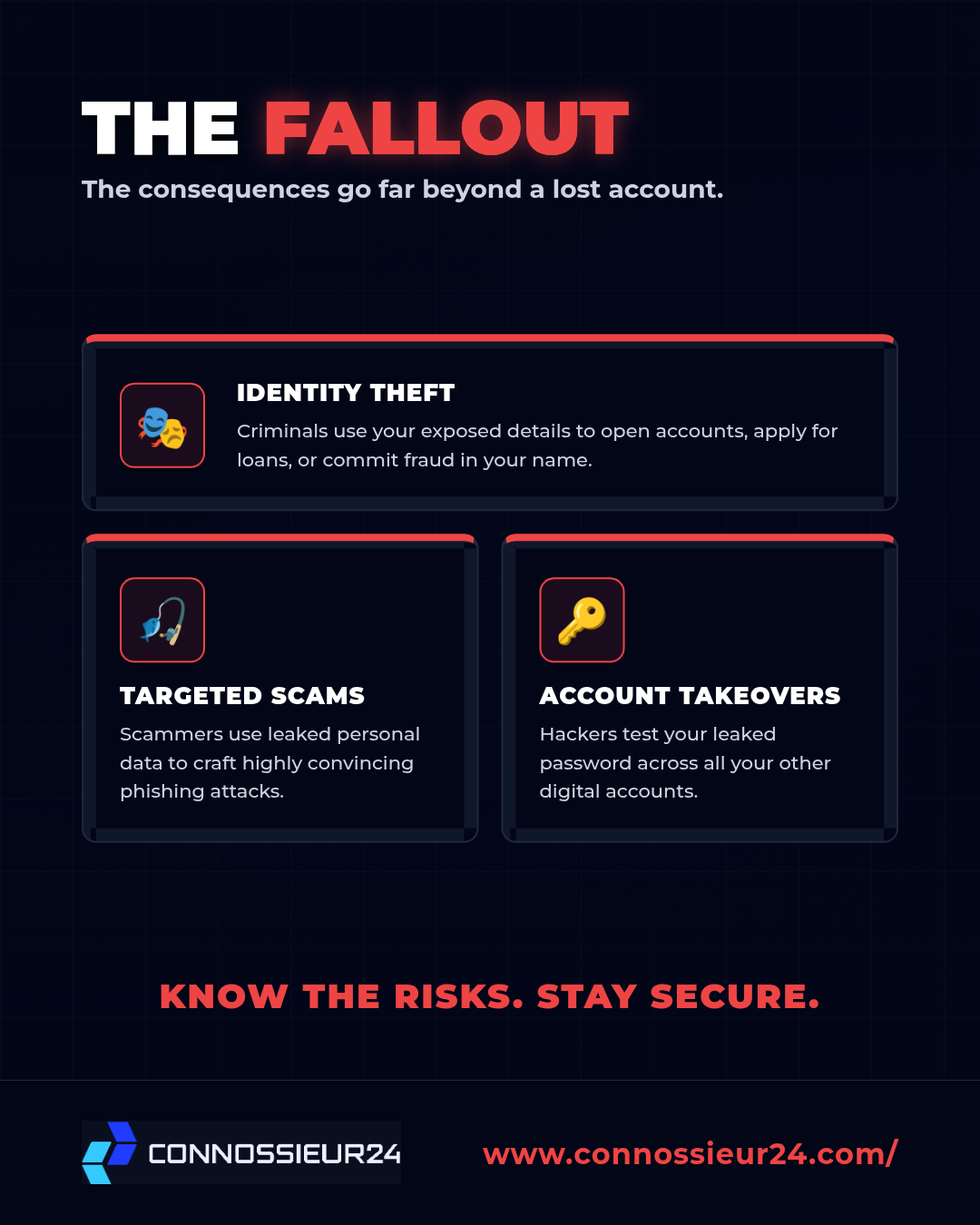
The consequences of a data breach go far beyond having to reset a password. Once your information is exposed, it is often sold on the dark web.
Criminals use this exposed information to commit identity theft, open fraudulent accounts in your name, or launch highly targeted phishing scams. If you reuse passwords, a breach on one minor website can lead to a complete takeover of your main email or bank accounts.
You do not have to work for a big company to be affected. If your information is stored by a service that suffers a breach, you are at risk. Your personal information is valuable. Know the risks and take steps to protect it.