
Day 27: What Should You Do to Protect Your Data?
You may not be able to completely prevent every data breach, especially when the breach happens to a service you use rather than your own device. However, you can significantly reduce your risk and respond quickly if your information is exposed.
You cannot control every breach, but you can completely control how prepared you are and how quickly you respond.
Proactive Measures
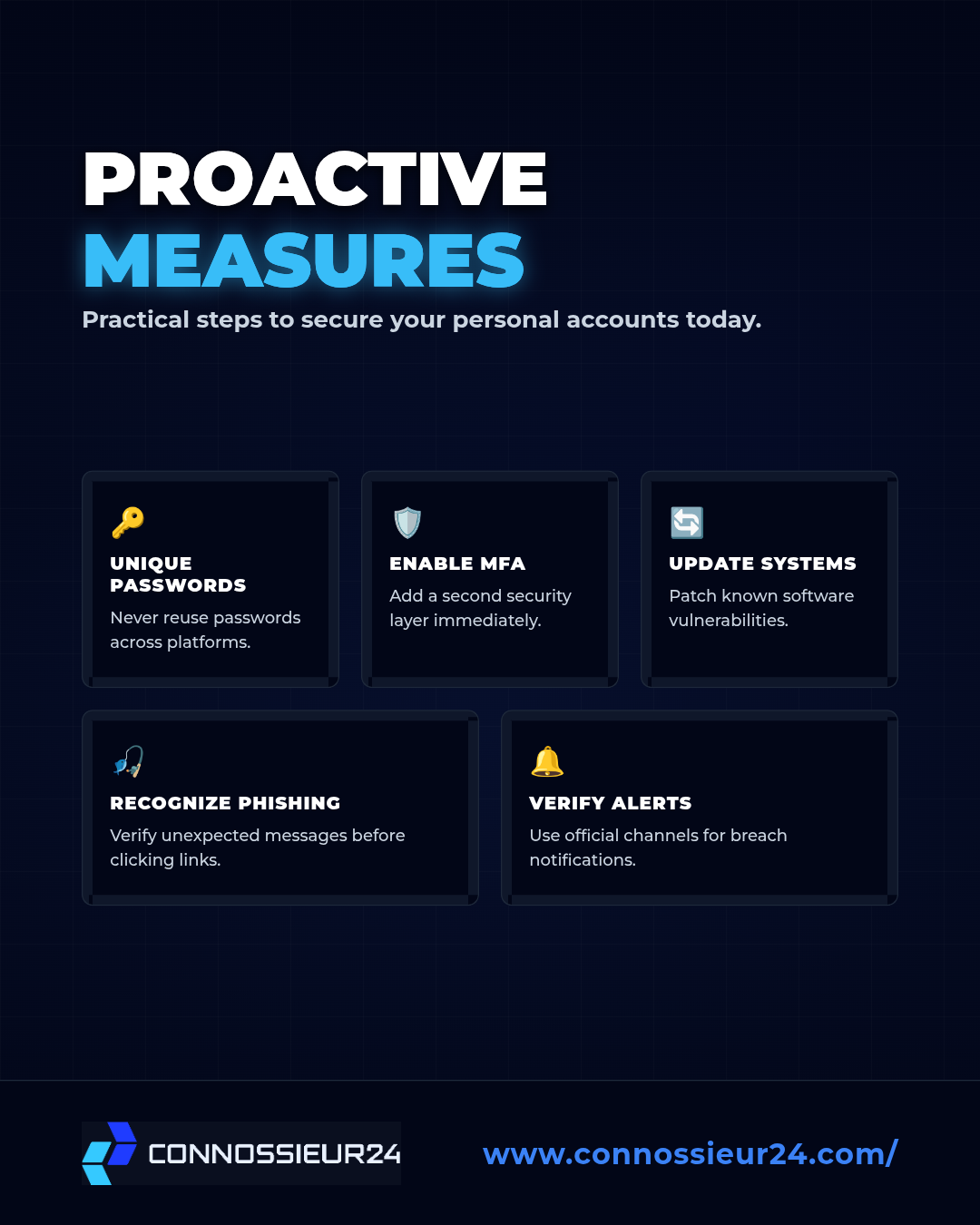
The best time to secure your data is before a breach happens. Implement these practical steps today to lock down your accounts:
- Use Unique Passwords: Never reuse the same password across different accounts. If one service is breached, criminals cannot use that password to access your other accounts.
- Enable Multi-Factor Authentication (MFA): Always add another layer of protection, especially to your email and financial accounts.
- Keep Your Devices Updated: Updates often fix known security vulnerabilities before attackers can exploit them.
- Recognize Phishing Attempts: Verify unexpected messages before clicking links or sharing information.
- Review Connected Apps: Remove third-party apps and services you no longer use or trust.
Incident Response
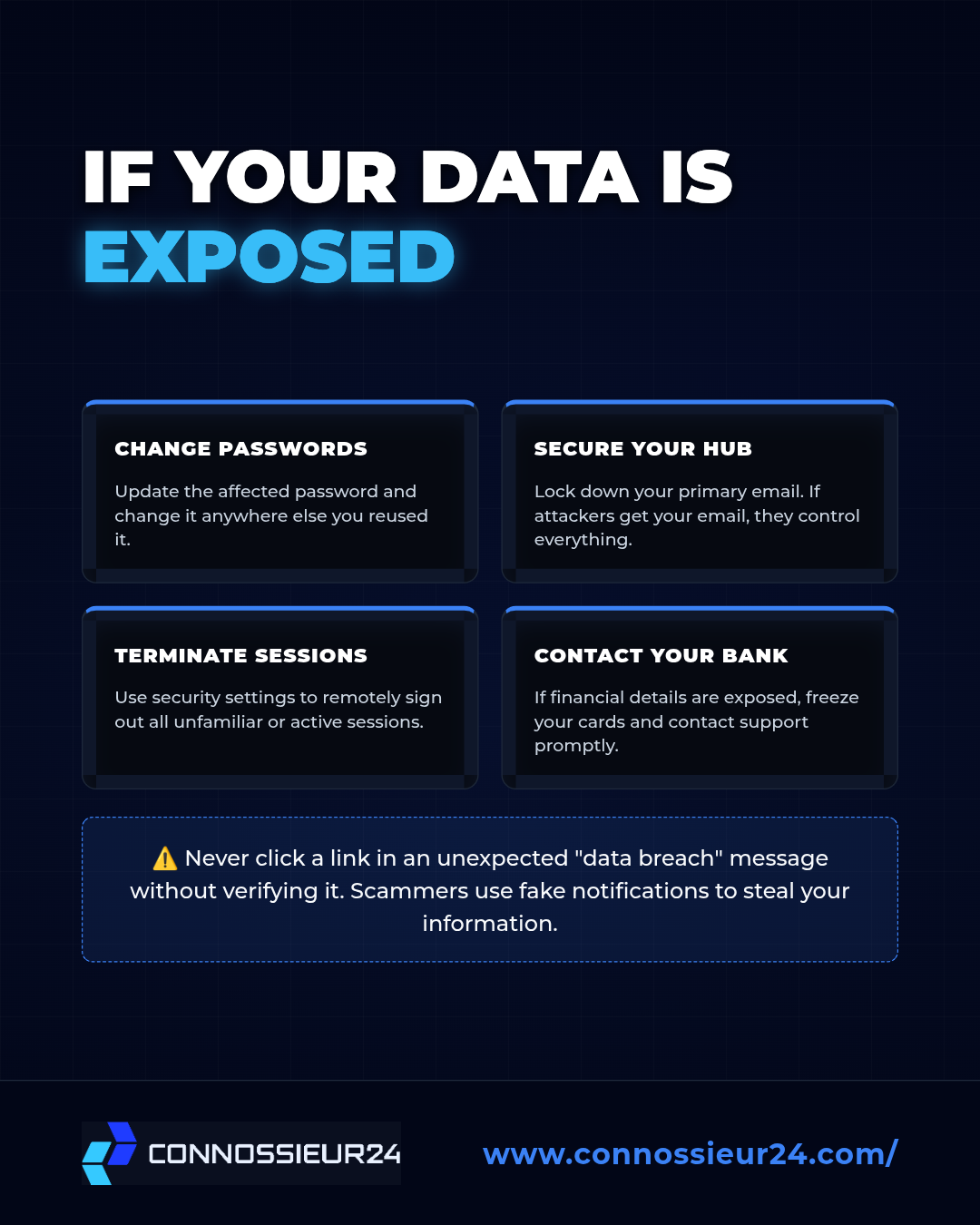
If you receive a legitimate notification that your data has been exposed, do not panic. Take these immediate actions:
- Change Passwords Immediately: Change the affected password directly on the service's official website. If you reused that password anywhere else, change it there too.
- Secure Your Hub: Ensure your primary email account is secure, especially if it is used to reset your other passwords.
- Terminate Sessions: Sign out of all unfamiliar or active sessions if the service offers that option in their security settings.
- Contact Your Bank: If financial or payment information may be compromised, contact your financial institution promptly.
- Watch for Scams: Monitor your accounts for suspicious activity.
Never click a link in an unexpected "data breach" message without verifying it first. Scammers often send fake breach notifications to pressure you into revealing your information.
Prepare before a breach. Respond carefully if one happens.