
Day 24: The Bank Alert Trap
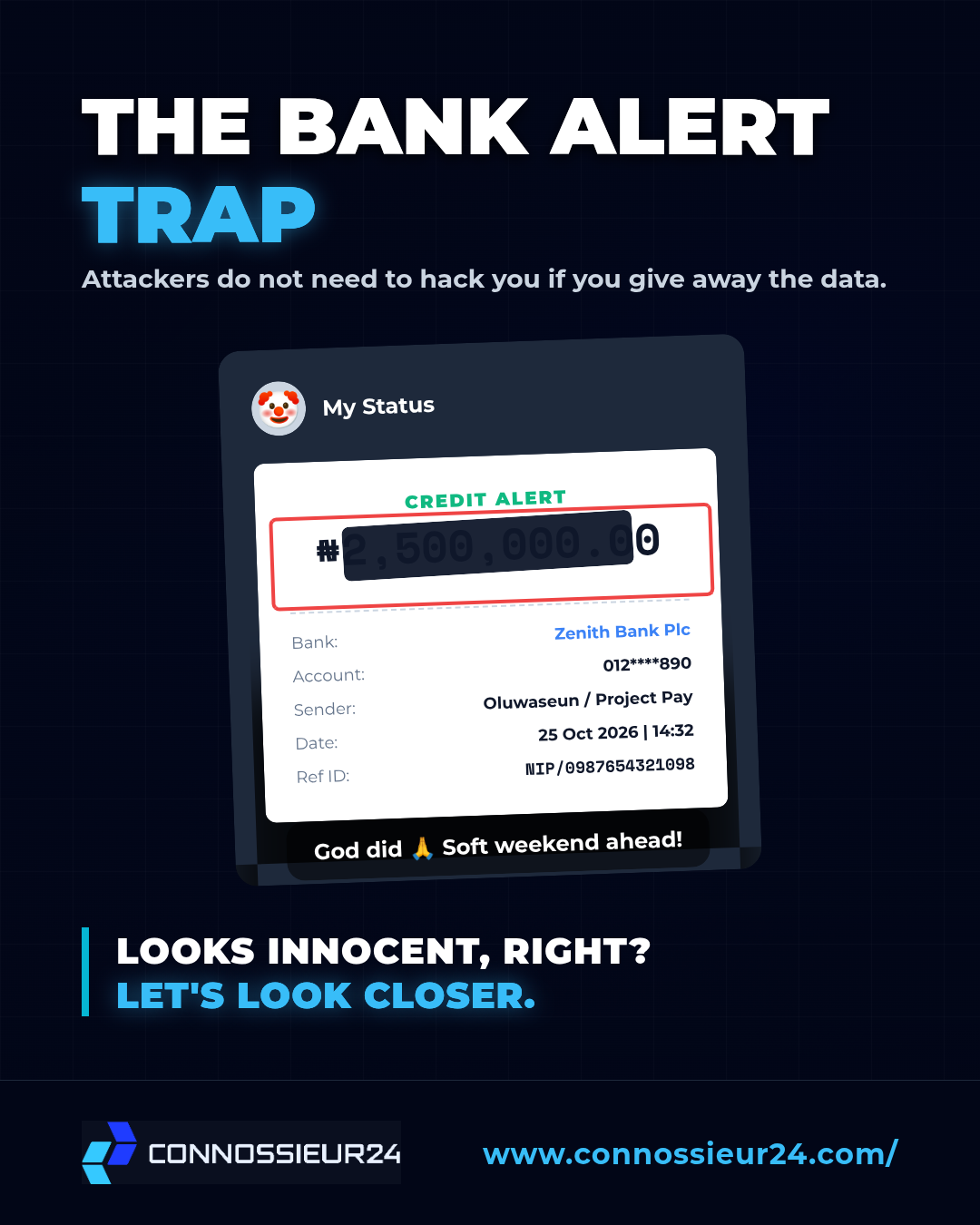
We spend a lot of time worrying about complex malware and sophisticated hackers breaking into our systems. But the truth is, attackers do not need to hack you if you willingly give them the data.
This is the foundation of Open-Source Intelligence (OSINT). Cybercriminals actively scan social media statuses and public profiles to gather fragments of information. When combined, these small pieces build a highly detailed map of your life and finances.
The Threat Extraction
Let us look at a very common online habit: posting a screenshot of a credit alert or a massive transaction receipt on your WhatsApp status. You paint over the account balance using your phone's highlighter tool, add a caption like "God did," and hit send.
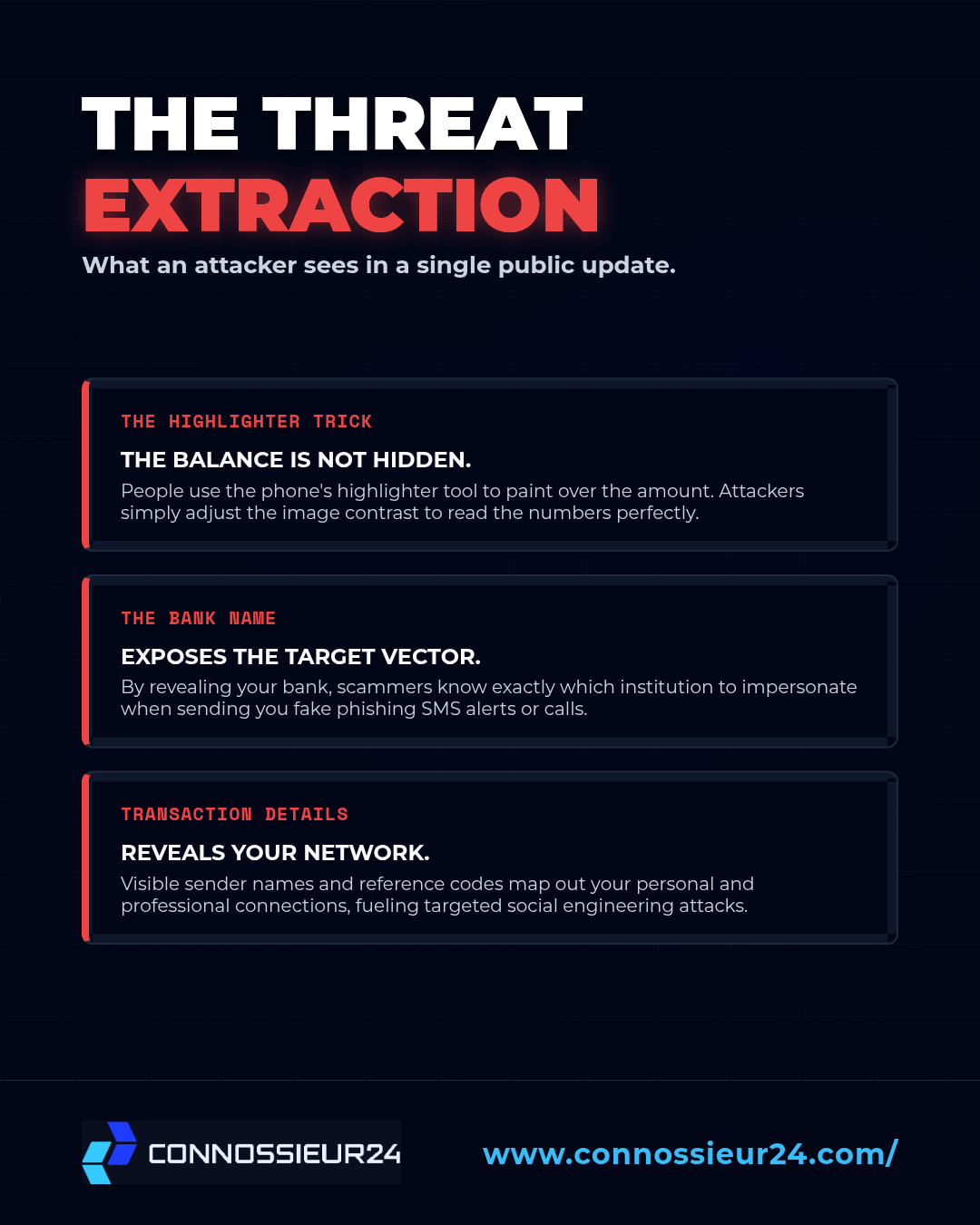
Here is exactly what a criminal extracts from that single update:
- The Highlighter Trick: The balance is not actually hidden. A digital highlighter mark from a standard photo editor is mostly transparent. Attackers simply adjust the image contrast and brightness on their phones to read the numbers perfectly.
- The Bank Name: By revealing which bank you use, scammers know exactly which institution to impersonate. They can now send you highly targeted SMS phishing messages claiming your specific account is blocked.
- Transaction Details: Visible sender names and transaction reference codes map out your personal and professional connections, fueling targeted social engineering attacks.
Protect Your Footprint
Do not make the attacker's job easy.
Never post credit alerts, financial receipts, or sensitive documents online. Simply painting over the text with your phone's photo editor is not enough to protect your underlying data.
Pause before you post.