
Day 14: What is Identity Theft?
Imagine logging into your social media only to find you are locked out. Then, you discover someone is messaging your friends, making purchases, and living a digital life under your name without your permission.
That is identity theft.
Identity theft happens when someone obtains and misuses your personal information to impersonate you, access your accounts, commit fraud, or gain benefits unlawfully.
The Data Targets
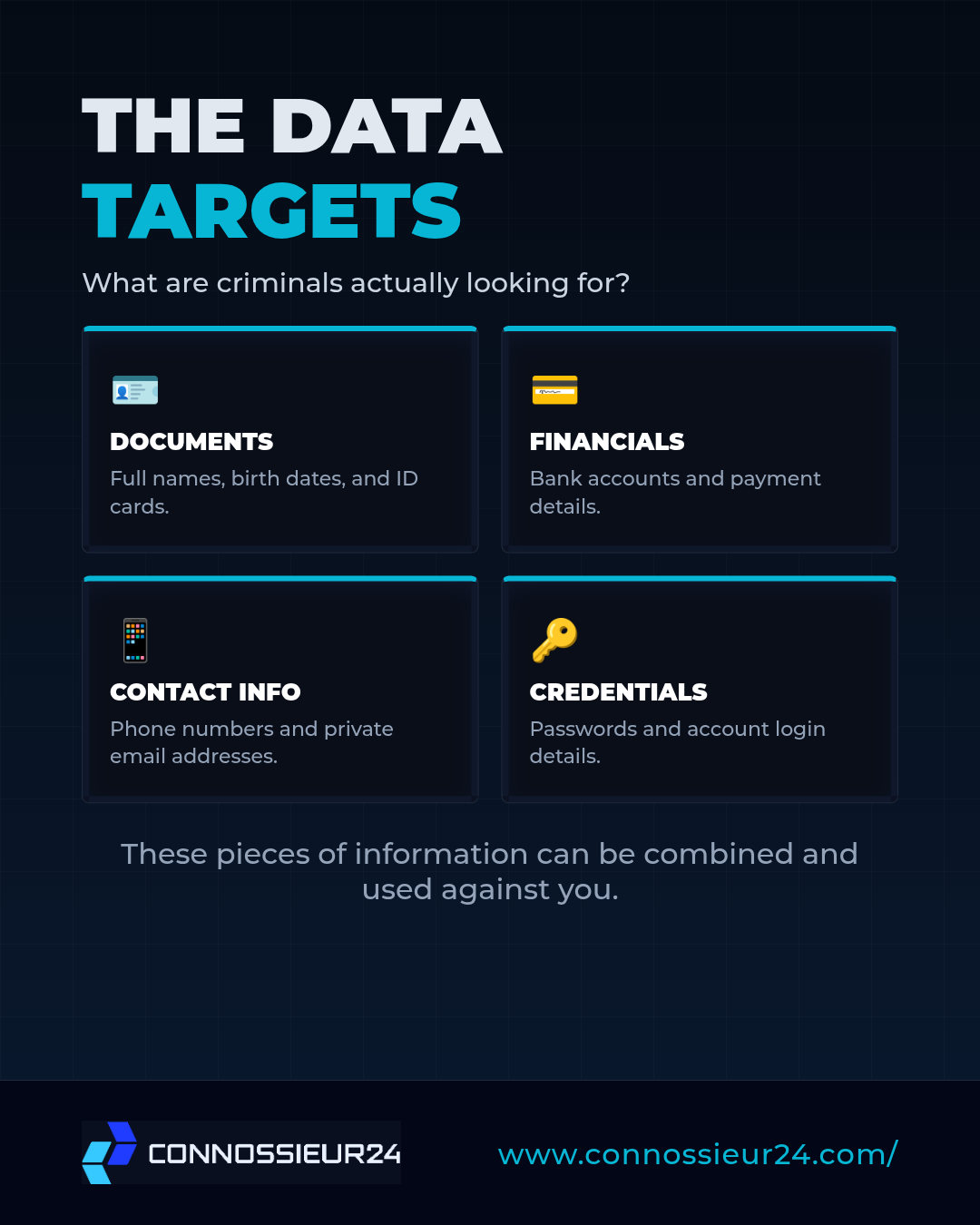
Your personal information might seem harmless on its own—who cares if someone knows your birthday, right? But when cybercriminals combine different pieces of data, they can build a master key to your identity.
What are criminals actually looking for?
- Identification Documents: Your full legal name, date of birth, and government-issued ID cards.
- Contact Information: Your personal phone number and private email addresses.
- Financial Details: Bank account numbers and payment card details.
- Digital Credentials: Your usernames, passwords, and account login details.
Beyond the Money
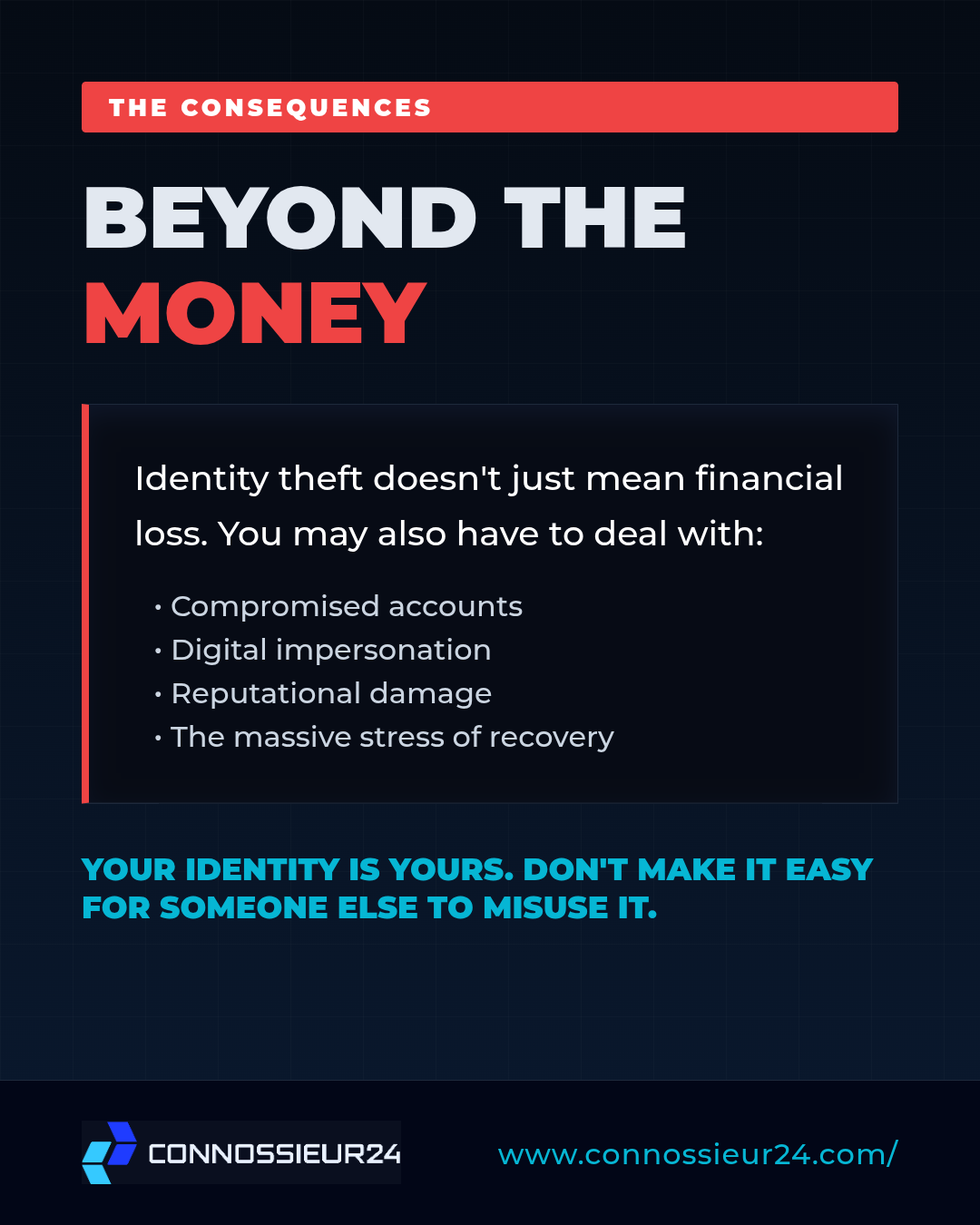
When we hear "identity theft," we usually think of a stolen credit card. But the consequences go far beyond just losing money.
A compromised digital identity can lead to:
- Total lockouts from your primary email and social media accounts.
- Digital impersonation, where attackers trick your family, friends, or clients.
- Severe reputational damage.
- A massively stressful, time-consuming process of proving who you are to recover your identity.
Your identity is yours. Don't make it easy for someone else to misuse it. The more we understand the risks, the better we can protect ourselves.