
Day 15: How Does Identity Theft Happen?
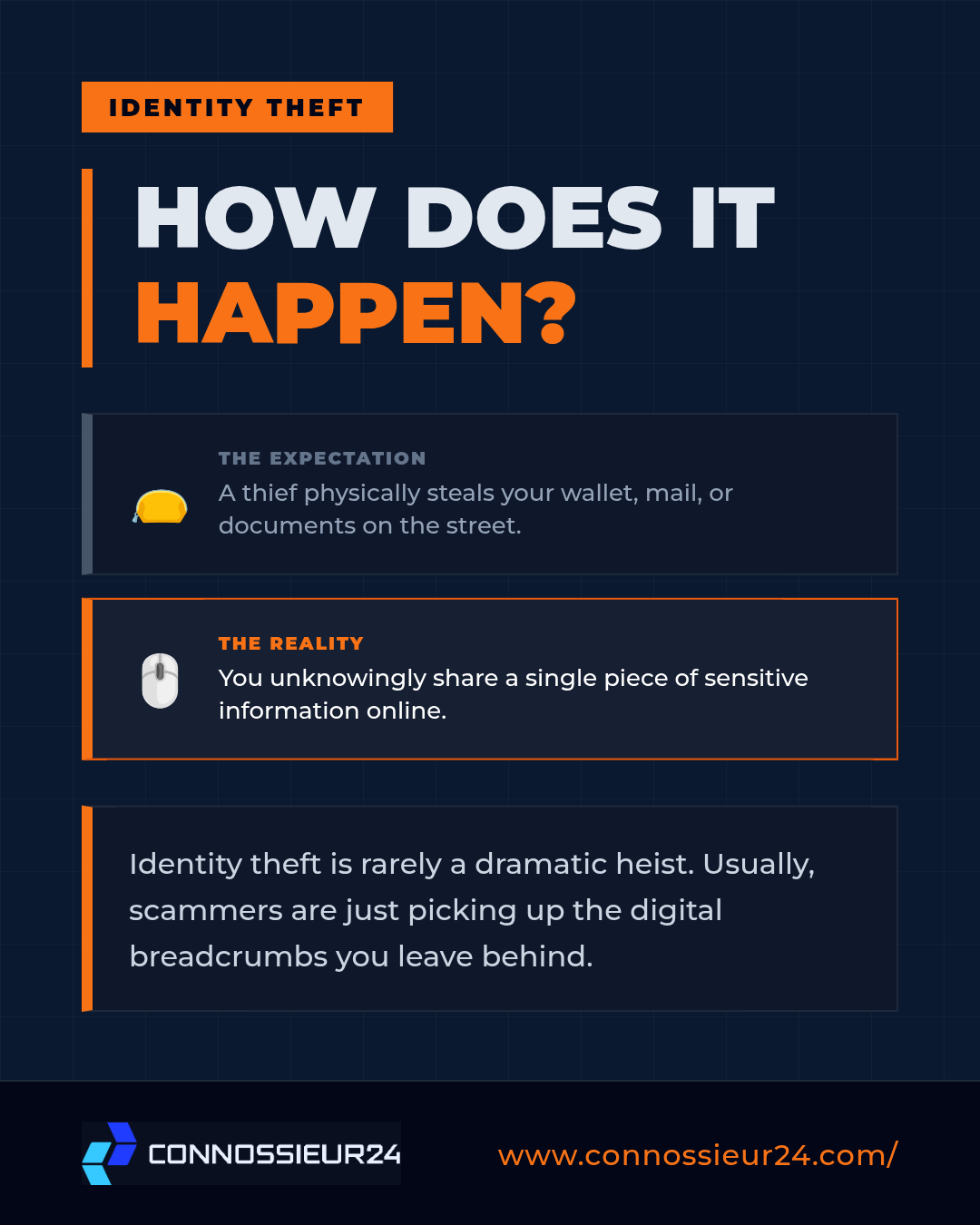
When we hear about identity theft, we often picture someone picking our pocket or stealing a physical wallet. But in the digital age, identity theft rarely requires an attacker to be anywhere near you. Sometimes, it starts with a single click or a single piece of information shared online.
6 Ways Your Data is Exposed
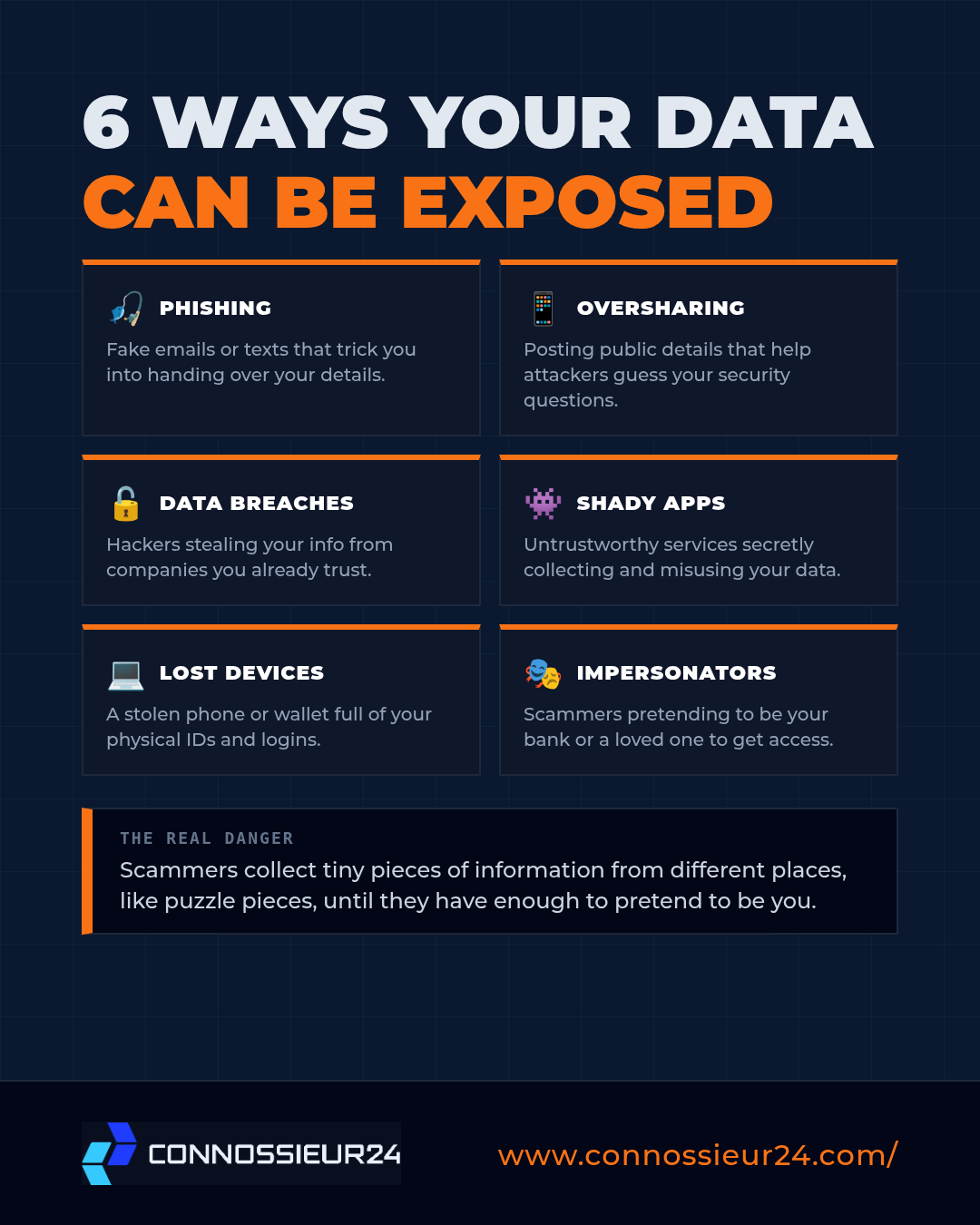
Cybercriminals are constantly looking for the easiest way in. Here are the most common ways they gather the puzzle pieces of your identity:
- Phishing: Fake emails, texts, or websites designed to trick you into voluntarily handing over your personal details or login credentials.
- Oversharing Online: Posting public details on social media—like your high school, pet's name, or hometown—that help attackers easily guess your security questions.
- Data Breaches: Hackers stealing your information directly from the databases of companies, platforms, and services you already trust.
- Shady Apps: Downloading malicious or untrustworthy apps that secretly collect, harvest, and misuse the data stored on your phone.
- Lost Devices: A stolen smartphone, laptop, or physical wallet full of your IDs and auto-saved passwords.
- Impersonators: Scammers calling or texting you, pretending to be your bank, the government, or even a loved one in distress to get access to your accounts.
Connecting the Dots
Here is the most dangerous part of identity theft: information that seems completely harmless on its own can become a weapon when attackers combine it with other leaked details.
Before you hand over your personal information, ask yourself three simple questions: Who is asking for this? Why do they actually need it? And can I verify that this request is legitimate?
The Golden Rule: Think before you share. Verify before you trust.