
Day 12: Why You Shouldn't Joke With Your Passwords
Your password might look like a small, annoying detail when you are trying to log in, but careless password habits can create serious security risks.
Your accounts are connected to your identity, your memories, your private conversations, and sometimes your money. Don't make protecting them an afterthought.
5 Dangerous Habits to Avoid
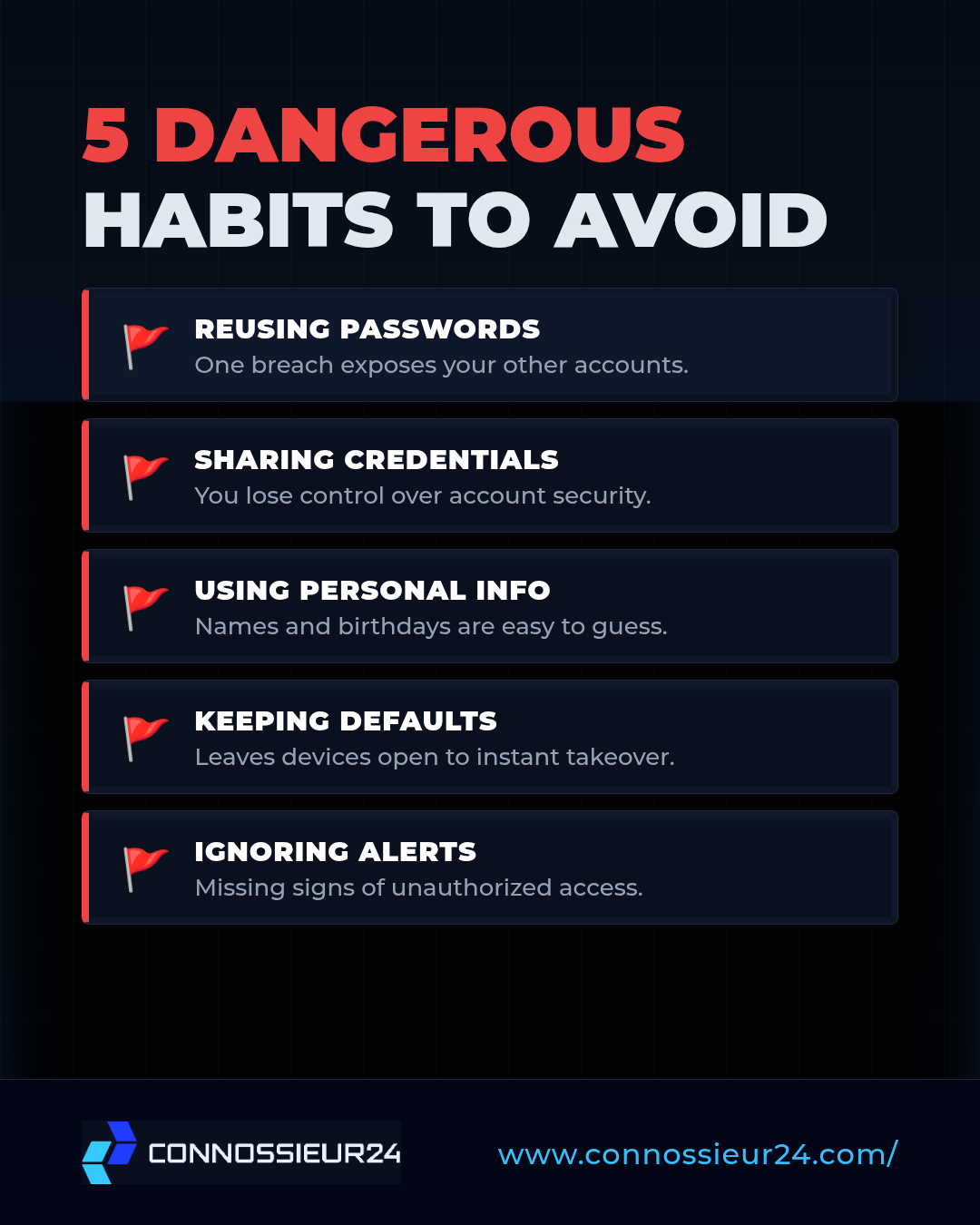
We all want convenience, but convenience is exactly what attackers exploit. Here are the most common password habits that leave the door wide open for cybercriminals:
- Reusing the same password: This is the most dangerous habit of all. If one small website suffers a data breach, attackers will immediately try that same password on your banking, email, and social media accounts.
- Sharing passwords: Even with someone you completely trust, sharing credentials reduces your control over the account and multiplies the chances of it being accidentally exposed.
- Using personal information: Using names, birthdays, pet names, or other details that people can easily discover about you makes passwords incredibly easy to guess.
- Keeping default passwords: Leaving a new router, smart TV, or account with its original factory password exposes it to unnecessary, immediate risk.
- Ignoring security alerts: Treat unexpected login notifications or password-reset emails as serious alarms. Ignoring them means missing the early signs of unauthorized access.
The Domino Effect
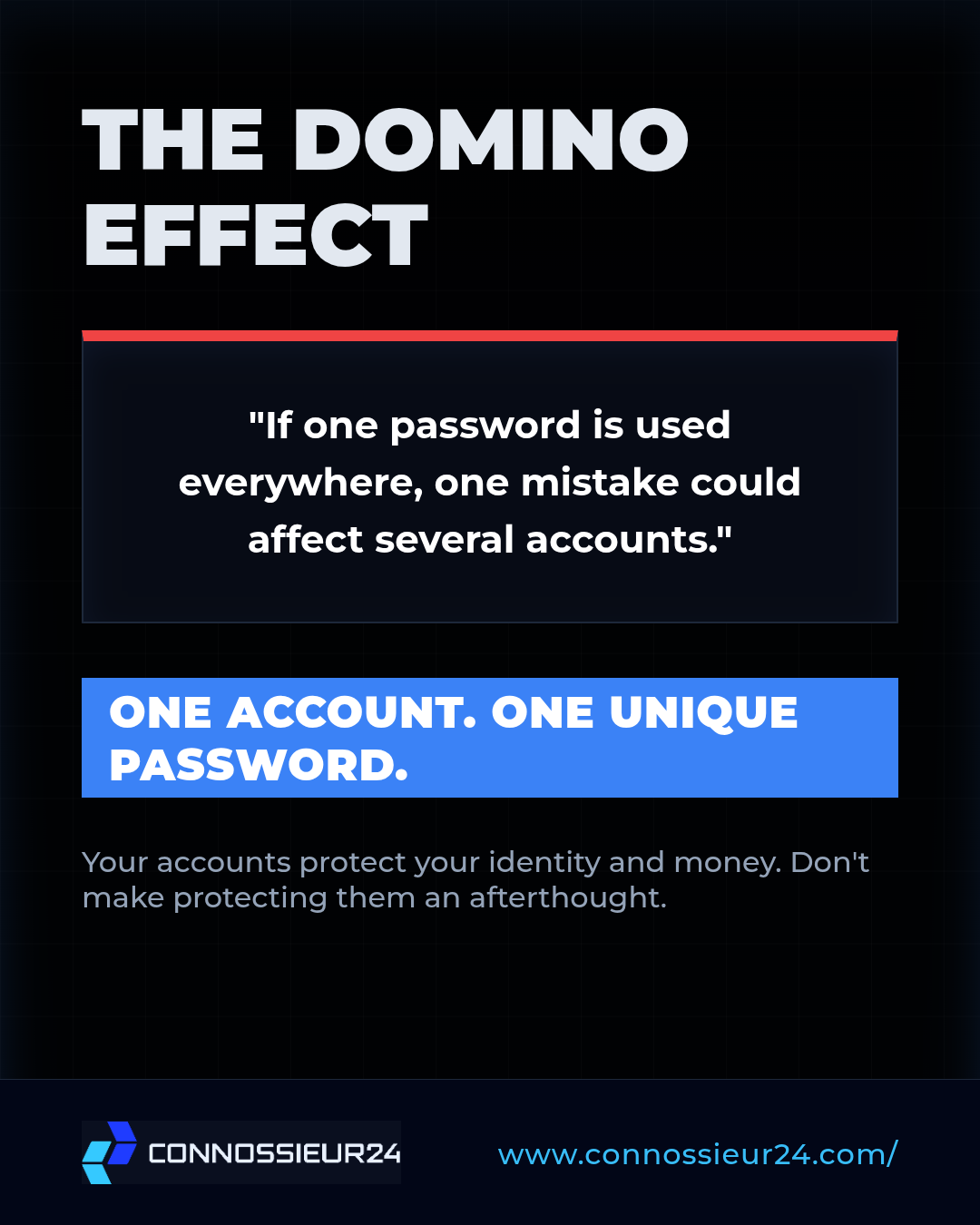
Think about how interconnected your digital life is. If one password is used everywhere, one single mistake or breach could affect several accounts simultaneously. It creates a devastating domino effect.
The easiest way to stop the dominoes from falling is simple:
One Account. One Unique Password.
Make every important account harder to compromise by giving it its own unique key.