
Day 11: Are Your Passwords Weaker Than You Think?
Your password is the very first line of defense protecting your online accounts. But what happens when the lock on your front door is too easy to pick?
If your password is short, predictable, or tied to your personal information, it is barely providing any security at all.
The Weak Password Trap
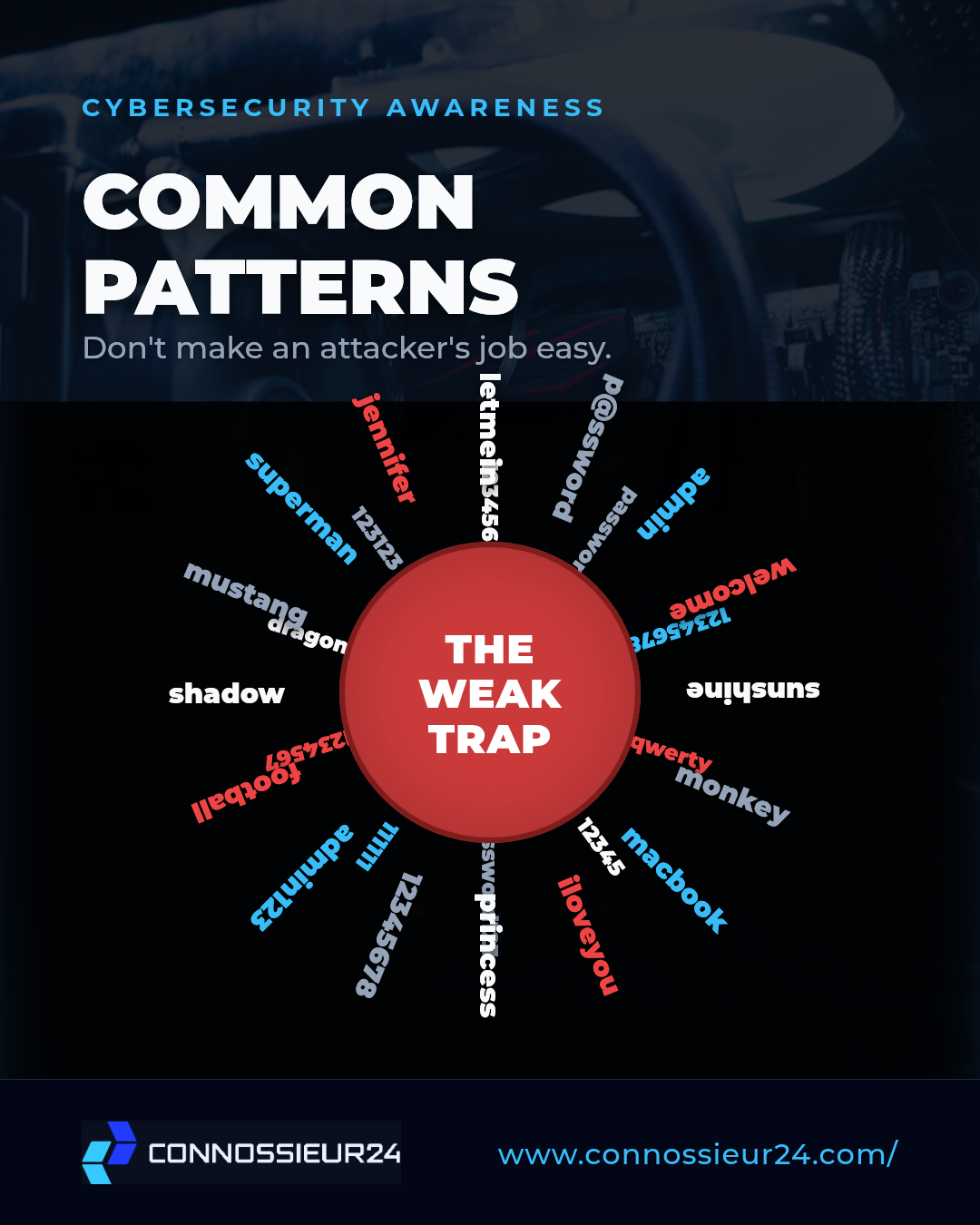
Passwords like 123456, password123, or your name combined with your birth year (e.g., John1990) might seem incredibly easy to remember. Unfortunately, they are also incredibly easy for automated hacking software to guess.
Common examples of weak passwords include:
- Short, predictable sequences:
12345,qwerty,111111. - Common dictionary words: Adding "1" or "!" to the end of a common word does not make it secure.
- Personal Information: Attackers can easily scrape your social media for names of your pets, your hometown, or your birthday.
- Simple patterns: Repeated characters or keyboard walk patterns that anyone could guess.
Your password shouldn't make an attacker's job easier.
The Master Key Effect
A weak password puts that specific account at risk, but the danger compounds exponentially if that password belongs to your email account.
Why? Because your email acts as the master key to your entire digital life.
If someone gains access to your email inbox, they can simply navigate to your social media, school portals, or financial accounts, click "Forgot Password," and intercept the reset link sent right to your compromised inbox. From there, they can lock you out of everything.
Key Takeaway
Take a moment today to think about the passwords protecting your digital life. If an attacker knows your name and your birthday, could they guess your password? If the answer is yes, it's time to make a change.