
Day 17: Is Your Friend's Identity Compromised?
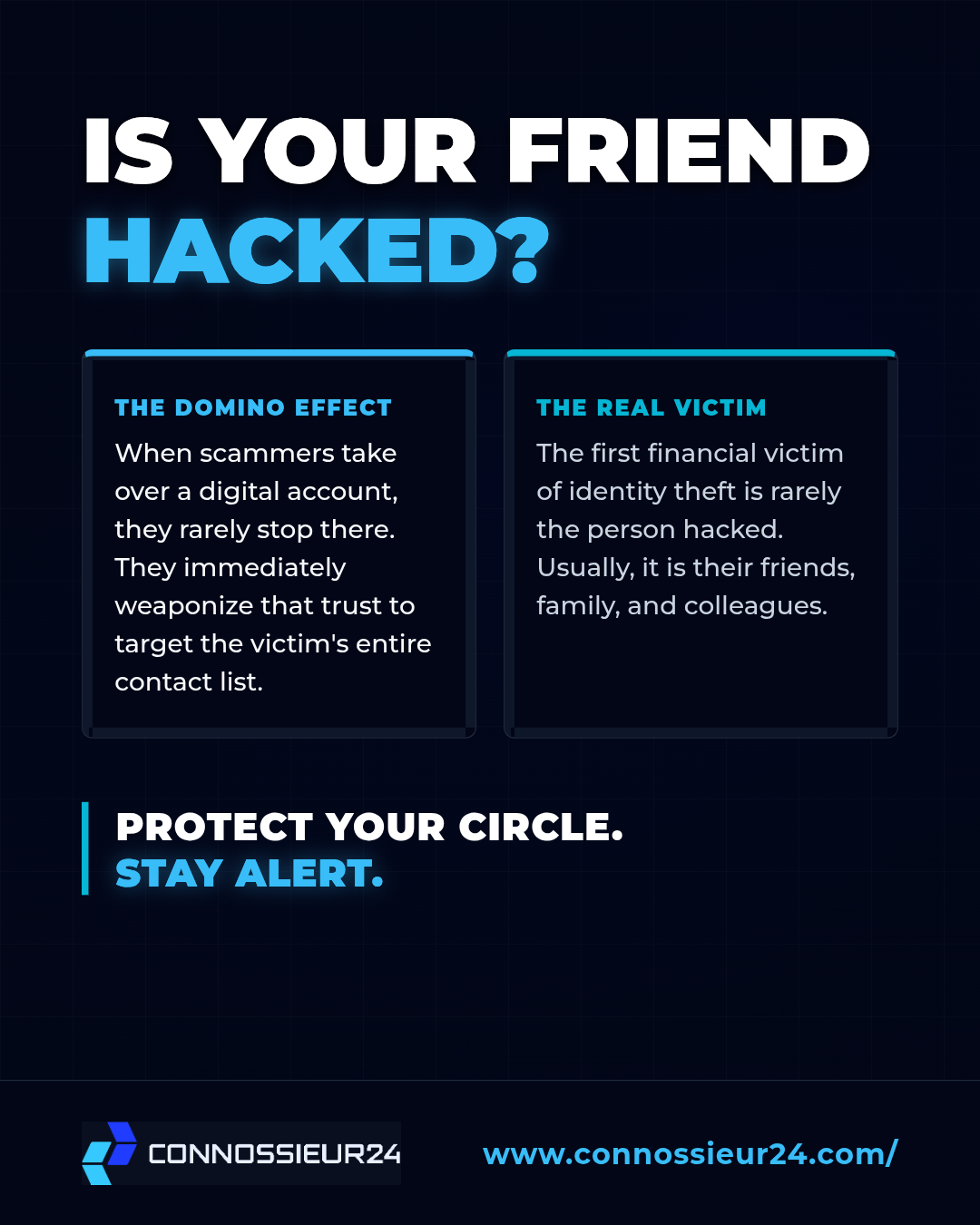
We often think of identity theft as an attack on a single individual. The reality is that the first victims of identity theft are usually the friends and family of the person whose data was stolen.
When scammers take over someone's digital life, they do not just sit on the account. They immediately target the victim's contact list to extract money or spread malicious links. If a scammer hacks your friend, they will target you next.
Spot the Red Flags
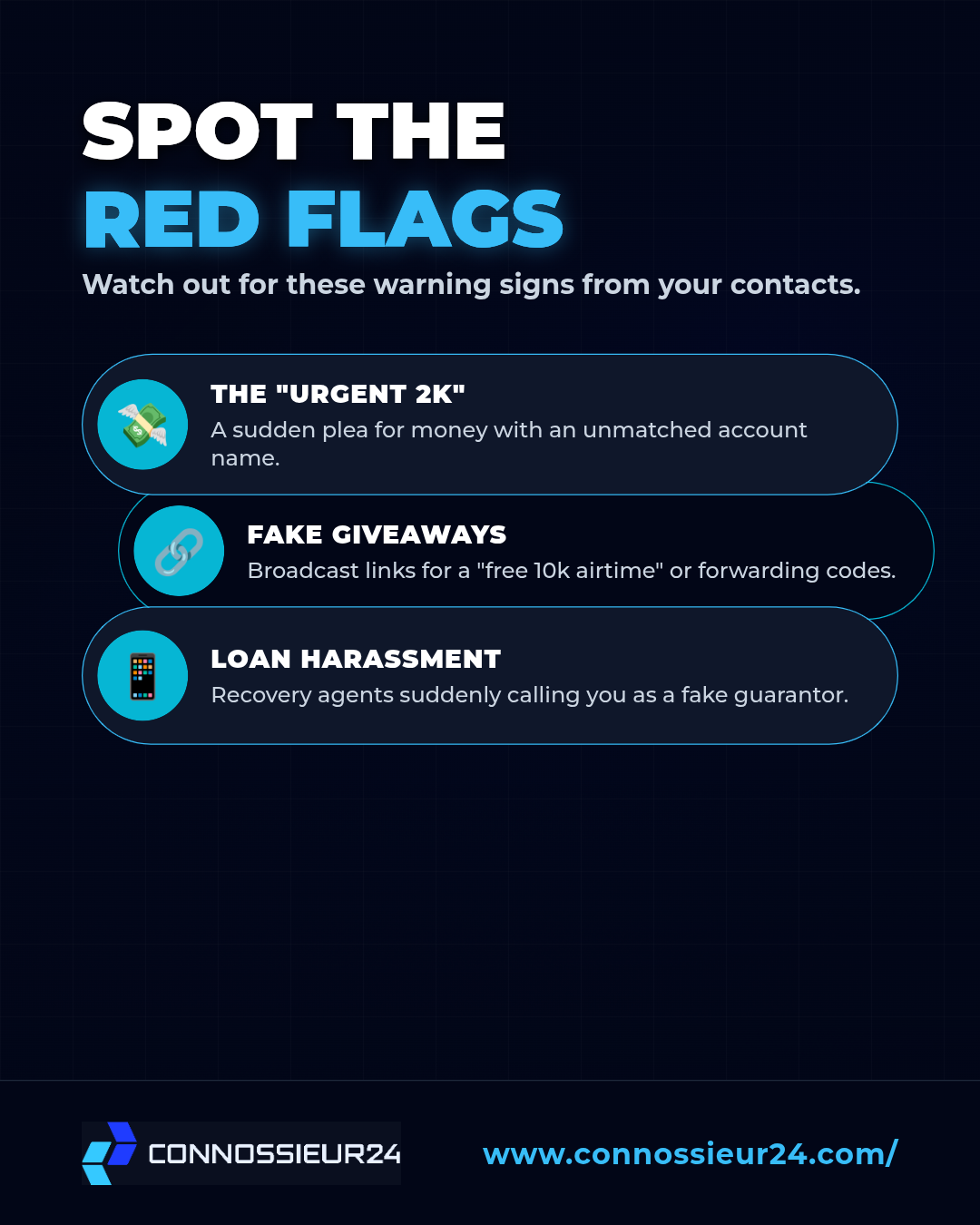
Scammers rely on your trust to bypass your natural skepticism. Watch out for these warning signs from people you know:
- The "Urgent 2k" Scam: You receive a sudden plea for money to solve an emergency, but they provide an account number with a name that does not match theirs.
- Fake Giveaways: They send broadcast links promoting a "free 10k airtime giveaway" or ask you to forward an SMS code that just arrived on your phone.
- Loan App Harassment: Recovery agents suddenly start calling you, aggressively claiming your friend listed you as a guarantor for a debt.
The Verification Protocol
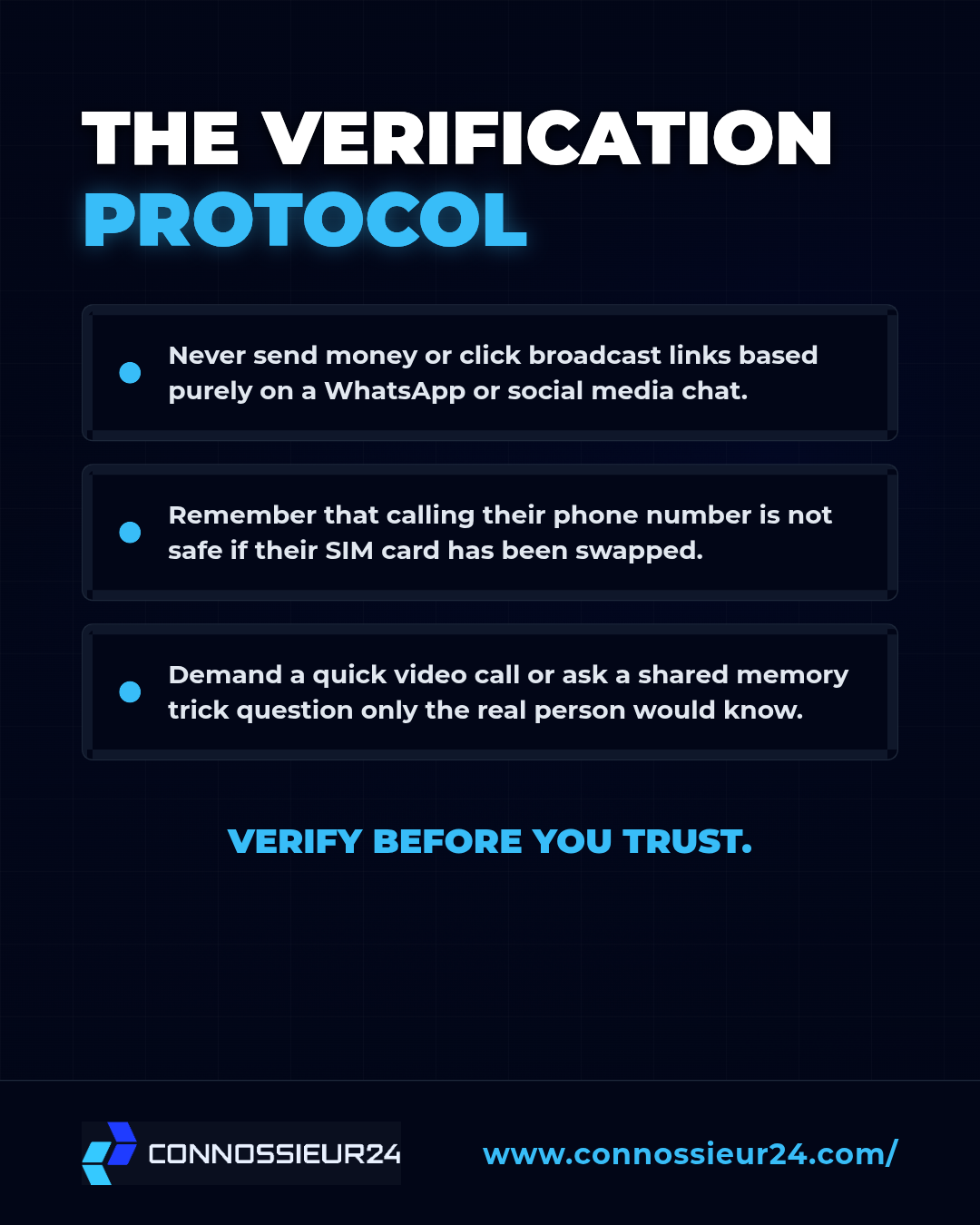
If you see these signs, your immediate reaction might be to help or to call them to find out what is going on. You must verify their identity first.
01. Never trust the chat. Do not send money or click broadcast links based purely on a WhatsApp or social media message.
02. Phone calls are not fail-proof. Remember that calling their regular phone number is not safe if their SIM card has been swapped by the attackers.
03. Demand strong verification. Force a quick video call to see their face, ask a shared memory trick question that only the real person would know, or reach out to a mutual friend to confirm the situation.
Protect your circle. Verify before you trust.