
Day 29: Cybersecurity Myths vs. Facts
In the digital world, bad advice spreads just as fast as malware. When you base your security habits on outdated information or common misconceptions, you leave yourself highly vulnerable to attacks.
Today, we are setting the record straight and busting three of the most dangerous cybersecurity myths.
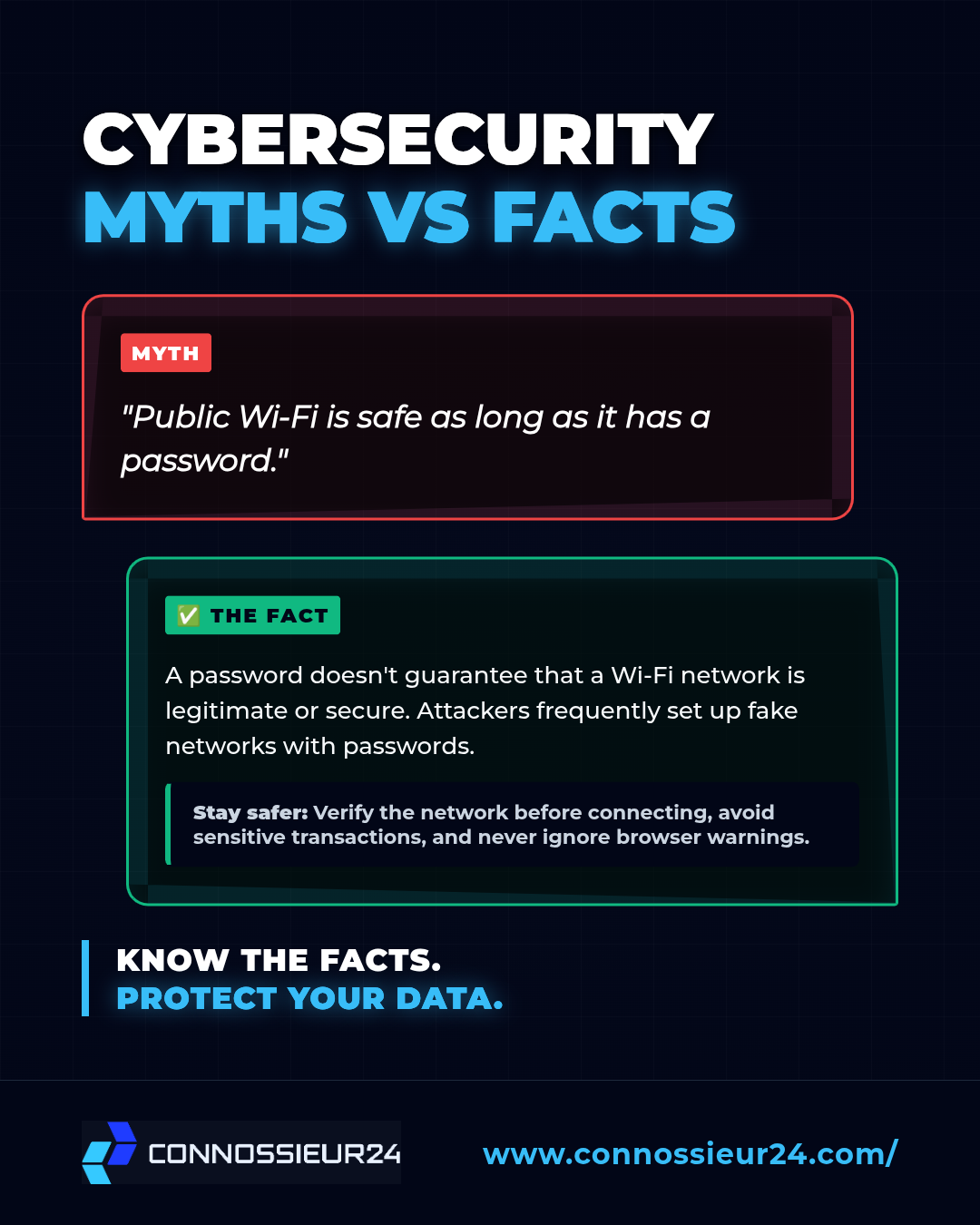
Myth 01: Public Wi-Fi
The Myth: "Public Wi-Fi is safe as long as it has a password."
The Fact: A password does not guarantee that a Wi-Fi network is legitimate or secure. Cybercriminals frequently set up fake "evil twin" networks with passwords to trick people into connecting, allowing the attackers to intercept all traffic on that network.
Stay safer: Verify the network name with the staff before connecting, avoid sensitive financial transactions on networks you do not trust, and never ignore browser security warnings about invalid certificates.
Myth 02: Messages from Friends
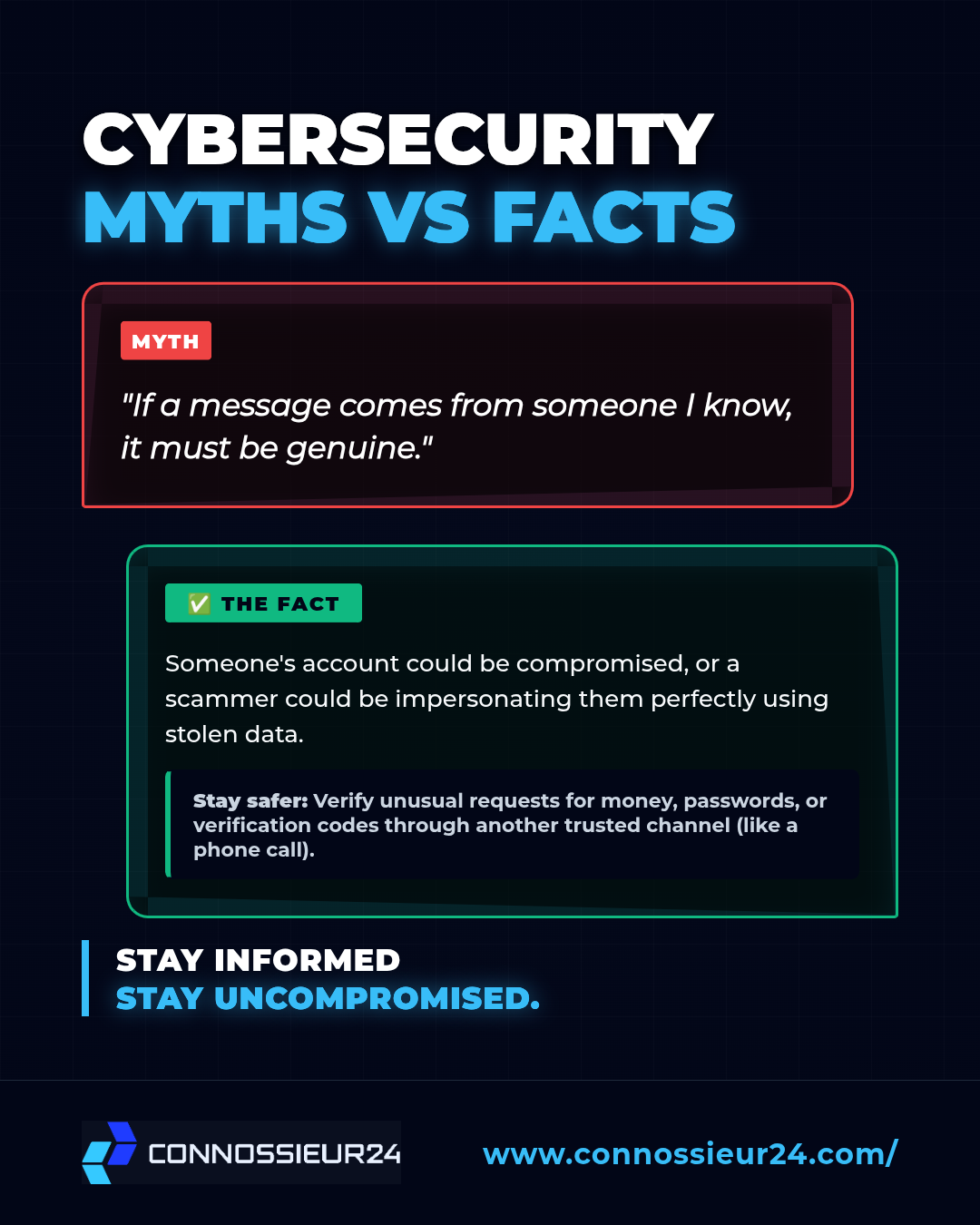
The Myth: "If a message comes from someone I know, it must be genuine."
The Fact: Someone's account could easily be compromised, or a scammer could be impersonating them perfectly using stolen data and AI tools. Attackers routinely hijack accounts solely to exploit the trust of the victim's friends and family.
Stay safer: Verify unusual requests for money, passwords, or verification codes through another trusted channel. If a friend asks for money via WhatsApp, give them a quick phone call to confirm.
Myth 03: Successful Downloads
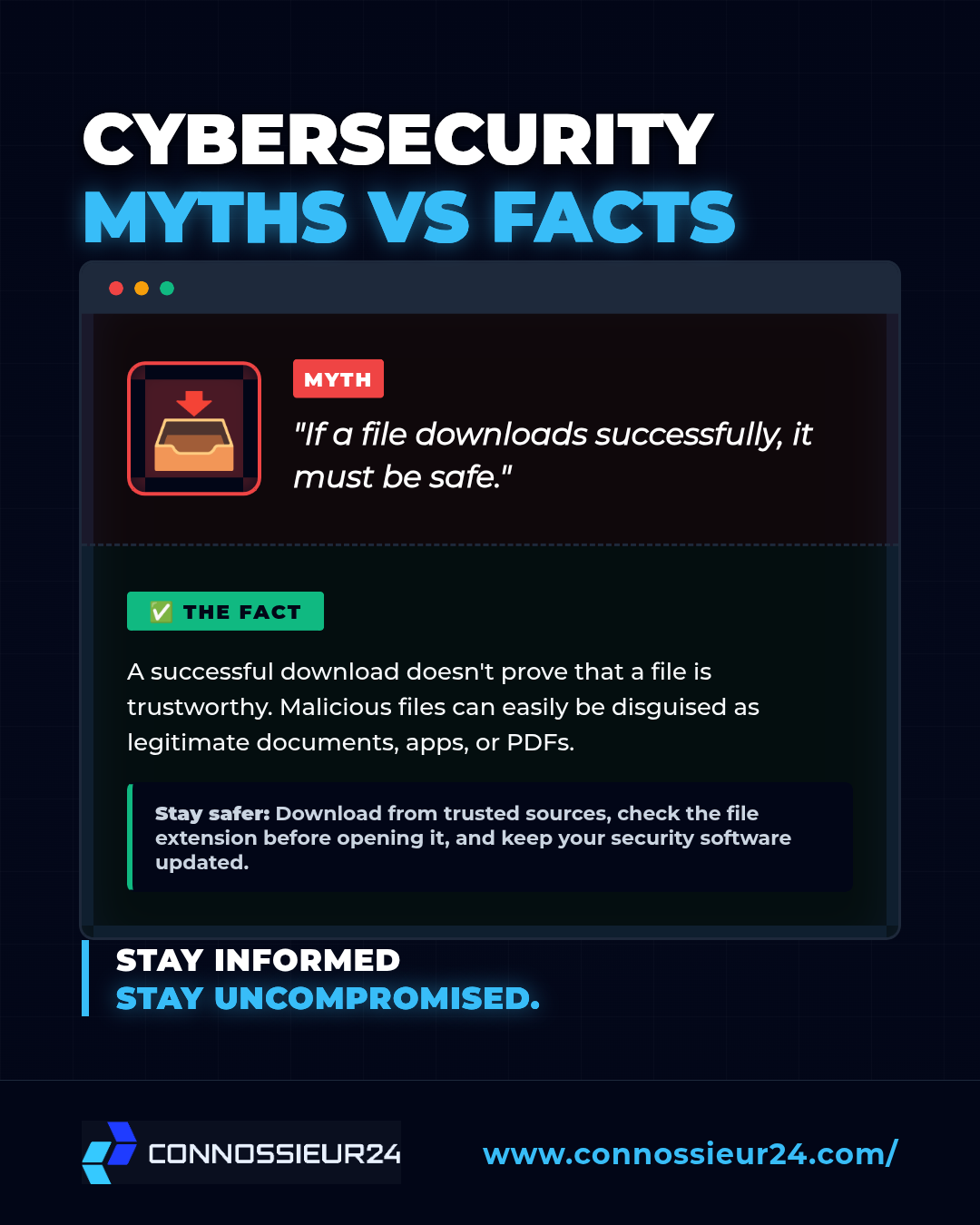
The Myth: "If a file downloads successfully, it must be safe."
The Fact: A successful download proves absolutely nothing about the safety of a file. Malicious files can be easily disguised as legitimate documents, mobile apps, or PDFs.
Stay safer: Download from trusted sources, check the file extension before opening it, and keep your security software updated to scan incoming files automatically.
Do not let a myth compromise your data.